


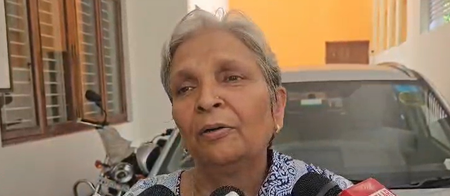
Bhopal/Jabalpur, May 27 (IANS) In a significant development, the Madhya Pradesh High Court has quashed the anticipatory bail granted to former district judge Giribala Singh in connection with the dowry death case of her daughter-in-law, Twisha Sharma.
The order, delivered on Wednesday, set aside the relief earlier extended by the lower court, through the May 15 order, observing that crucial materials from the case diary and witness statements had not been adequately considered before granting bail.
Justice Devnarayan Mishra revoked the anticipatory bail earlier granted by a Bhopal sessions court, observing that the lower court failed to adequately examine crucial evidence, including case diaries, witness testimonies, and WhatsApp conversations.
High Court, after reviewing the matter, found that the order suffered from serious infirmities. The bench noted that the trial court had overlooked vital witness testimonies and documentary evidence contained in the case diary, which pointed towards Singh’s alleged involvement.
The High Court emphasised that anticipatory bail in such sensitive cases must be granted only after a thorough and cautious examination of all materials, especially when the charges involve dowry death — a grave social evil that continues to plague society.
Earlier, a lower court had granted anticipatory bail to Singh, citing her age and professional standing. However, the cancellation of bail has sent ripples across legal and social circles, given Singh’s stature as a former judge.
The investigation revolves around grave accusations of domestic cruelty, the forced termination of a pregnancy, and physical assault that ultimately led to a death within the family’s residence in Katara Hills locality of Bhopal.
With the anticipatory relief now cancelled, the Central Bureau of Investigation (CBI) is expected to move forward with taking her into custody.
The case revolves around the tragic death of Twisha Sharma, who was married to Singh’s son, Samarth Singh. Allegations of dowry harassment and cruelty had surfaced soon after her demise, leading to the registration of a case under sections pertaining to dowry death and abetment.
The prosecution argued that Singh, despite her judicial background, played a role in perpetuating harassment against Twisha, which ultimately drove her to her death.
Legal experts believe the ruling underscores the judiciary’s commitment to ensuring accountability, regardless of position or past service. The order also reflects the court’s stand to treat dowry-related crimes with utmost seriousness, reinforcing the principle that no one is above the law.
With the High Court’s intervention, Singh now faces arrest and custodial interrogation, which is expected to shed further light on the circumstances surrounding Twisha Sharma’s death. Samarth Singh is already in CBI custody on remand till May 29.
The case is likely to become a touchstone in discussions about judicial impartiality and the broader fight against dowry practices in India.
–IANS
sktr/sd/