


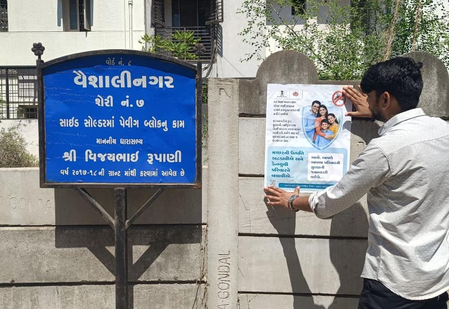
Rajkot, May 19 (IANS) Rajkot reported only one dengue case during the week of May 11-17, with no cases of malaria or chikungunya, according to the Rajkot Municipal Corporation’s health department, which credited sustained mosquito control and surveillance efforts across the city.
The department stated that dengue-carrying Aedes mosquitoes bite during the daytime and can transmit infection rapidly when they bite multiple individuals, particularly in densely populated areas.
It further noted that mosquito breeding tends to increase in urban areas due to the availability of stagnant clean water sources, alongside lapses in sanitation and public negligence regarding household hygiene.
The civic body said that the mosquito’s short life cycle and rapid reproduction contribute to the quick escalation of infestations if not controlled in time.
As part of vector control measures, anti-larval operations were carried out in 29,155 houses during the reporting week.
Fogging was conducted in 133 houses by field teams, while vehicle-mounted fogging machines were deployed in areas with higher mosquito density.
“Sensitive residential localities, public roads and locations with higher human footfall were included in the fogging coverage,” the department said.
In addition to household-level action, inspections were conducted at 655 premises, including construction sites, schools, hospitals, hotels, industries, hostels, commercial complexes, scrap yards, cellars, halls, farmhouses, party plots, religious places, petrol pumps and government offices.
Following inspections for mosquito breeding sources, notices were issued under municipal by-laws to 245 residential premises and 32 commercial establishments.
The civic body also stated that owners, occupiers or responsible persons of premises where mosquito breeding was found are held accountable, and notices along with administrative charges are issued in such cases.
For mosquito-borne diseases during the week, the city recorded zero malaria cases, one dengue case and zero chikungunya cases.
Cumulative data from January 1 shows three malaria cases, 14 dengue cases and one chikungunya case.
The department also provided details of other communicable diseases recorded during the same period.
There were 606 cases of cold and cough, 819 cases of general fever, 429 cases of diarrhoea and vomiting, and three cases of typhoid fever.
Year-to-date figures show 15,838 cases of cold and cough, 13,950 cases of general fever, 5,052 cases of diarrhoea and vomiting, 13 cases of typhoid fever and 22 cases of jaundice.
No cases of dysentery or cholera were reported either during the week or in cumulative figures since the beginning of the year.
As part of water-borne disease prevention measures, 1,434 chlorine tests were carried out during the reporting period to monitor water safety and reduce the risk of infection spread.
The health department reiterated that prevention of vector-borne and water-borne diseases depends on sustained surveillance, timely civic intervention and public cooperation in eliminating potential breeding sites.
–IANS
mys/skp