


Bengaluru: BJP MLC C.T. Ravi on Monday sought clarification from the Karnataka government over remarks by minister K.M. Shivalinge Gowda on payments to government officials, saying bribery should not be given a religious or cultural label.
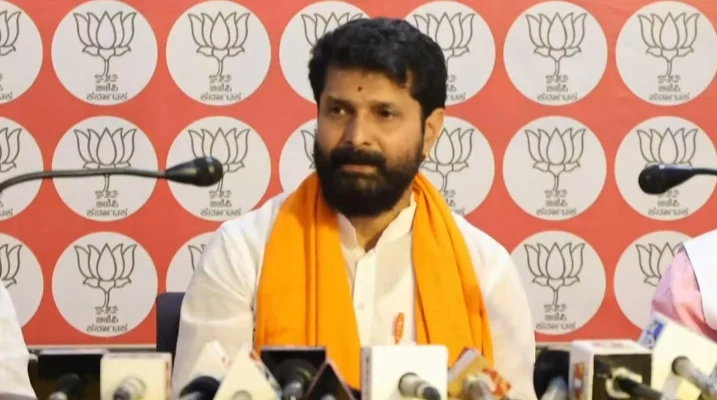
Addressing reporters at Vidhana Soudha, Ravi said, “Call a bribe a bribe. It is not right to give a religious veneer to corruption.” He was referring to Gowda’s recent remarks suggesting that people could offer a “tip” or payment to officials who complete their work honestly and on time. Gowda has subsequently said his comments were misunderstood and that he did not support bribery.
Ravi said that if the government accepted such a system, it might as well publish a “rate card” indicating the amount required for different services in each department.
‘Don’t politicise Kasturirangan report’
Ravi also spoke about the Kasturirangan report against the backdrop of the special legislature session on the Western Ghats.
He questioned the political debate surrounding the report and pointed out that both the Madhav Gadgil Committee and the Kasturirangan Committee were constituted during Congress-led governments at the Centre.
Ravi said the Gadgil Committee was formed in 2010 when Jairam Ramesh was Union environment minister, while the Kasturirangan Committee was constituted in 2012 during Jayanthi Natarajan’s tenure. He also referred to the first draft notification issued in March 2014.
He said political parties should therefore avoid making the issue solely about the current central government.
‘Balance environment and livelihoods’
Ravi said the BJP’s position on the Kasturirangan report was to seek a balance between environmental protection and the livelihoods of people living in the Western Ghats.
“Environment and people’s livelihoods are two sides of the same coin; one cannot be protected at the expense of the other,” he said.
He called for ground-level surveys at the village and survey-number level, alongside satellite and aerial surveys, to determine the actual extent of ecologically sensitive areas. He also suggested separately identifying natural and cultural landscapes.
Calls for incentives to Western Ghats residents
Ravi proposed financial incentives for communities living in the Western Ghats in recognition of their role in protecting the region’s forests and natural resources.
He suggested that a portion of green taxes or cesses could be used for development and conservation-linked incentives in the region. Specifically, he proposed considering a cess on areas benefiting from water from the Cauvery, Tungabhadra and Hemavathi river systems, with corresponding benefits for communities in Kodagu, Chikkamagaluru-Shivamogga and Hassan.
He also called for mechanisms to resolve local disputes at the taluk and district levels, including special adalats for grievance redressal.
Ravi said issues affecting Western Ghats residents should be resolved locally wherever possible instead of allowing every dispute to escalate to the High Court or Supreme Court.
“People’s livelihoods must be preserved, and the environment must also be protected. Our stance is a middle path that balances both,” Ravi said.