


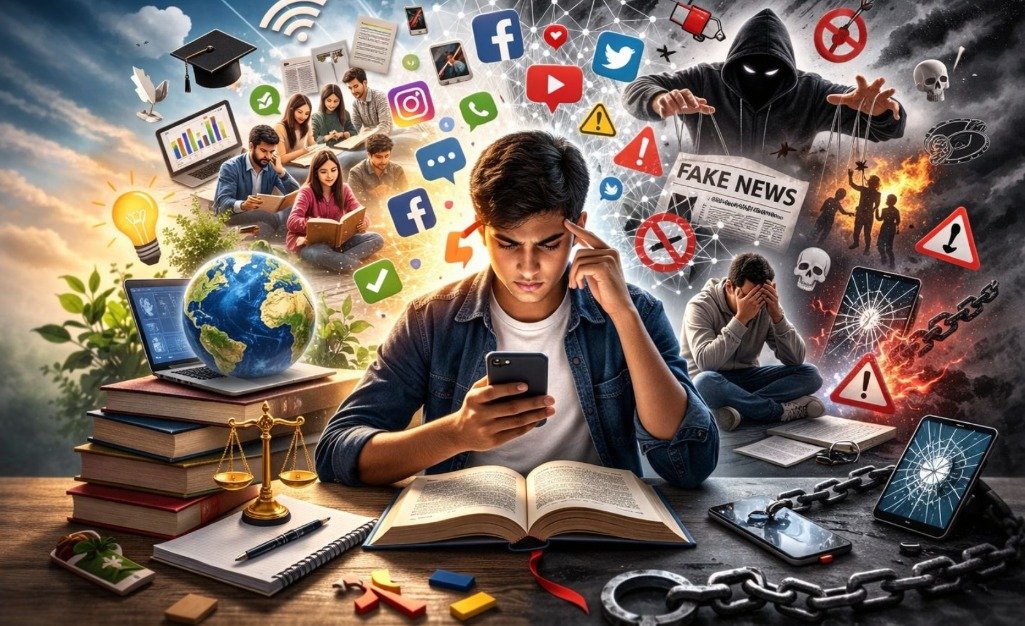
“To protect the youth from online tricks, educational institutions and society need to promote digital literacy and moral awareness.” — A. B. Nadvi
There is a proverb that says even nectar can turn into poison if consumed in excess. The rapid spread of modern technology, many argue, reflects this paradox. While digital tools have accelerated progress and expanded access to knowledge, concerns are mounting over their unintended social consequences.
Islamic scholar A.B. Nadvi has weighed in on the debate, cautioning that although modern technology provides vast opportunities for learning and skill enhancement, it also poses significant risks to the moral and intellectual development of young people. His recent article, published in the media, has sparked discussion on the social impact of digital overexposure.
Nadvi argues that excessive immersion in the digital ecosystem has distanced many youths from introspection and value-based growth. Social media platforms, he notes, are frequently used to circulate misinformation and distorted ideologies, making emotionally vulnerable users easy targets.
He also highlights the influence of algorithms and so-called “filter bubbles,” which repeatedly expose individuals to similar content. Such patterns, he warns, can reinforce biases, restrict alternative viewpoints and, in extreme cases, foster alienation and radical thinking with consequences for families and society.
Drawing on verses from the Quran, Nadvi urges young people to verify information before accepting or sharing it. He stresses the need to rely on credible media, educational institutions, teachers and parents for balanced guidance.
Calling for collective responsibility, Nadvi says institutions and society must actively promote digital literacy and ethical awareness. Responsible and informed engagement with digital platforms, he emphasises, is essential to protect democratic values, social harmony and individual well-being.