


New Delhi, March 25 (IANS) Amid the West Asia crisis, the Indian government is leaving no stone unturned when it comes to the safety of Indians in conflict zone, gas and fuel availability, long-term energy security measures and push for self-reliance across sectors.
Prime Minister Narendra Modi informed the Rajya Sabha that the government’s first concern is safeguarding citizens and more than 3.75 lakh Indians have been repatriated from the conflict zone (including over 700 medical students from Iran) and all necessary assistance and medical care is being provided to affected families.
Moreover, Prime Minister has personally held two rounds of calls with leaders of most West Asian nations and India remains in continuous contact with Gulf countries as well as Iran, Israel and the United States to restore peace. These discussions include de-escalation and reopening the Strait of Hormuz.
India has also categorically opposed attacks on civilians, civil infrastructure and energy/transport systems, declaring them unacceptable, and has urged all parties to seek a peaceful resolution.
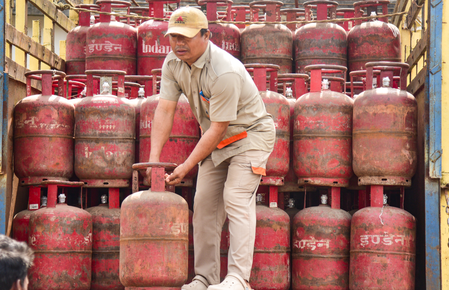
Notably, all Indian refineries are operating at high capacity with adequate crude inventories, domestic LPG production has increased, and petrol/diesel stocks are sufficient; panic buying in some areas is being driven by rumours that the government has debunked.
The government has ensured that ships carrying crude oil and LPG have arrived from many countries, and it continues to work on contingency plans to keep supplies uninterrupted.
In the meantime, India has diversified its crude/LNG/LPG imports from 27 to 41 countries, built strategic petroleum reserves exceeding 53 lakh tonnes (with work underway to reach 65 lakh tonnes) and enhanced refining capacity. The government is also promoting piped natural gas (PNG) alongside LPG and boosting domestic LPG production.
Further, to reduce dependence on foreign shipping and imports, the government has launched a Rs 70,000-crore ‘Made-in-India’ shipbuilding mission and is expanding shipbuilding, ship-breaking and maintenance capacity; it has similarly strengthened the defence sector to manufacture most weaponry domestically.
PM Modi also assured that adequate fertiliser supplies are prepared, and the government will ensure that farmers do not bear the burden of the crisis. States have been urged to keep benefits like the PM Garib Kalyan Anna Yojana flowing to the poor, labourers and migrant workers, and to act against hoarders.
Prioritising gas supply to restaurants, dhabas, canteens and migrant labourers, the Centre restored 20 per cent commercial LPG supply and subsequently increased allocations so that overall commercial LPG supply to States/UTs is up to 50 per cent.
Priority sectors continue to receive 100 per cent domestic PNG and CNG supplies, while industrial/commercial consumers are receiving about 80 per cent of normal gas use. Over 7,500 PNG connections were issued/activated in one day.
In strict action against hoarding and black marketing, states are empowered under the Essential Commodities Act and LPG Control Order to crack down on malpractices; 32 States/UTs have set up control rooms and 33 have district monitoring committees.
Enforcement agencies have conducted about 3,400 raids and seized around 1,000 cylinders, registered 642 FIRs and arrested 155 people, while PSU Oil Marketing Companies have carried out over 1,500 surprise inspections.
When it comes to maritime and shipping safety, all Indian seafarers in the Persian Gulf are safe, with no incidents involving Indian-flagged vessels. Two Indian LPG ships — Pine Gas and Jag Vasant — have crossed the Strait of Hormuz and are en route to Indian ports.
The Directorate General of Shipping is monitoring 20 Indian-flagged vessels carrying about 540 seafarers, operates a 24×7 control room and has already repatriated more than 585 seafarers. Ports across India have added storage space and continue cargo operations smoothly.
Meanwhile, the Ministry of External Affairs and Indian missions are operating 24×7 helplines, engaging with community organisations and facilitating visas. Since February 28, about 4.02 lakh passengers have returned to India.
Flights continue from the UAE, Saudi Arabia, Oman and Qatar, while alternative routes via Saudi Arabia and Armenia/Azerbaijan/Jordan are assisting Indians in Kuwait, Bahrain, Iran and Israel.
–IANS
na/