


New Delhi, Sep 9 (IANS) The Uttar Pradesh government will challenge the Allahabad High Court’s order quashing the detention of a 24-year-old student activist under the National Security Act (NSA) and directing the recovery of Rs 5 lakh compensation from the salary of the Gautam Buddha Nagar District Magistrate and other officials, Solicitor General Tushar Mehta told the Supreme Court on Wednesday.
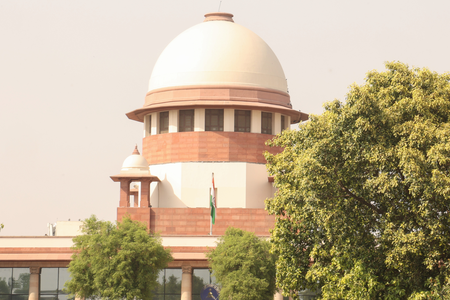
The submission was made by SG Mehta before a Bench headed by Chief Justice of India (CJI) Surya Kant during a hearing related to a show-cause notice issued by the Greater Noida officials against a student of Gautam Buddha University over a campaign for the CJP protest.
The Solicitor General said that the High Court order was being challenged before the Supreme Court by way of a Special Leave Petition (SLP).
The development comes days after a Division Bench of Justices Atul Sreedharan and Achal Sachdev of the Allahabad High Court allowed a habeas corpus petition filed by Akriti Chaudhary and quashed her detention under the NSA.
The High Court held that Chaudhary’s continued incarceration under the NSA was “violative of her rights under Article 21” and directed that she be set at liberty if she was not wanted in any other case. It also directed that Rs 5 lakh be paid to Chaudhary as compensation and recovered from the salary of the District Magistrate, Gautam Buddha Nagar, as well as other officials found responsible, “right down to the SHO of the Police Station” who had prepared the initial report warranting her detention.
The matter arose from labour unrest in Gautam Buddha Nagar in April 2026, when workers protested over low wages, long working hours and inadequate pay. The state government claimed that Chaudhary had acted as an “agent provocateur” and that her actions and dissemination of information contributed to the violence that erupted from April 13.
However, Chaudhary contended that the proceedings against her were an attempt to stifle her freedom of speech and expression and that there was no material to justify her detention under the stringent provisions of the NSA.
The High Court found that the alleged violence had commenced only after Chaudhary was taken into custody. It also examined WhatsApp conversations and observed that the Uttar Pradesh government had failed to point to “a single message” or video clip showing that she had incited violence or disclosed a conspiracy to provoke rioting, arson or destruction of property.
It further observed that the videos relied upon by the state authorities showed people gathered peacefully and did not indicate that the crowd was armed or agitated. “Any detention under the NSA is an exception. It is not a substitute to ensure that a person who may receive bail on account of merits of his case is still detained in custody under a concocted reasoning by the State,” the Allahabad High Court said.
The High Court also held that the grounds of detention were “repetitive, speculative and are only opinion-based” and lacked material to support the District Magistrate’s conclusions. It found that a notice issued under Section 130 of the Bharatiya Nagarik Suraksha Sanhita (BNSS) appeared to have been prepared after Chaudhary’s arrest, describing the procedure as “ex post facto the arrest and nothing more than a sham”.
On the issue of compensation, the High Court criticised the conduct of the Gautam Buddha Nagar District Magistrate, observing that the officer was expected to examine the material carefully before invoking the NSA against a female student activist. It said the conduct of the District Magistrate was “worthy of derision” and held that the officer had “desired to set an example out of the Petitioner and deter others from exercising their right to freedom of speech and expression in public spaces in support of the labourers.”
The High Court further said that the District Magistrate was “guilty of violating his oath of allegiance”, making the case fit for imposing compensation. It also observed that the state government must recognise that peaceful agitation is protected by the Constitution and described allowing protests as akin to a “safety valve in a pressure cooker”, helping release accumulated public grievances rather than allowing them to build up to a point where violence becomes inevitable.
The matter has now reached the Supreme Court, with the Uttar Pradesh government indicating that it will challenge the Allahabad High Court’s judgment.
–IANS
pds/uk