


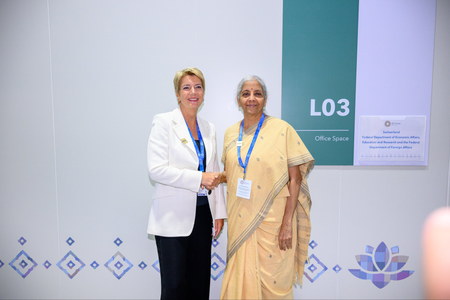
New Delhi, Oct 15 (IANS) Finance Minister Nirmala Sitharaman on Thursday said that jobs require ecosystems, not isolated interventions, and sustainable job creation requires high-quality and inclusive economic growth.
This, in turn, needs macroeconomic stability, efficient infrastructure, simple and certain regulations, and broad-based access to finance and skills, FM Sitharaman said as she participated as India’s Governor of the World Bank in the 114th Meeting of the Development Committee Plenary in Bangkok, Thailand.
“We welcome the continued focus on mobilising private capital and creating jobs. At a time of growing energy market stress, trade fragmentation, climate pressures, and rapid technological change, productive and better-paid jobs remain the most effective pathway to poverty reduction and shared prosperity,” FM Sitharaman said.
According to her, last-mile connectivity to energy and job markets, large-scale physical and digital public infrastructure, financial inclusion, and regulatory trust in market forces are critical for improved productivity and jobs at scale.
“The private sector must remain at the centre of the development agenda. Most jobs will be and should be created by private enterprises MSMEs, and startups will play a big role. Mobilising private investment is therefore essential. At the same time, success should be measured not by the volume of financing mobilised, but by outcomes: jobs created and rise in productivity,” said Finance Minister.
She further said that competitive financing must remain a core priority.
“The World Bank must remain a development partner through competitive pricing, tapping tools like local currency financing, stronger guarantee products, and lower transaction costs. Affordable, predictable, and accessible financing must remain and at the core of the Middle-Income strategy,” said FM Sitharaman.
The Knowledge Bank must help address market failures. The most effective interventions from the World Bank Group would be in addressing market failures in critical areas like urbanisation, tourism, agricultural exports and critical minerals.
“Developing countries stand to benefit greatly from the boost to state capacity that can come from AI: it deserves much greater attention in the Bank’s operational and knowledge agenda,” she stressed.
“We reiterate our longstanding concerns regarding Worldwide Governance Indicators and similar composite assessments. Given their far-reaching implications, there is a need for a comprehensive review and revision of existing methodologies to ensure that they are transparent, objective, evidence-based, and better aligned with current realities and the diverse development experiences of member countries,” said Finance Minister.
Finally, evolution must strengthen voice and development impact.
“The ultimate measure of success is whether reforms help countries create jobs, raise productivity, reduce poverty, and improve living standards. We also reiterate the importance of strengthening the voice and representation of developing countries in the governance architecture of the Bank,” she mentioned.
–IANS
na/