


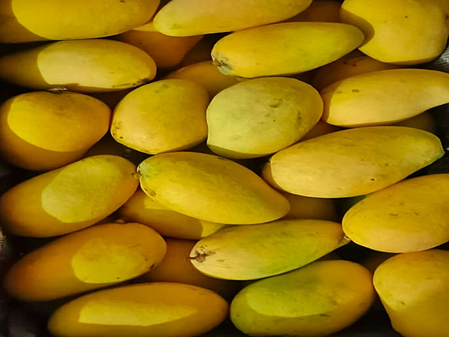
Bhopal/Rewa, June 27 (IANS) The famous Sundarja mango of Madhya Pradesh’s Rewa district is gaining recognition not only across India but also in international markets.
Known for its rich aroma, unique taste, and nutritional value, the mango has become the identity of the Govindgarh region and a source of pride for the state.
According to the Madhya Pradesh government, the Sundarja mango grows only in Govindgarh because the area’s soil, climate, and temperature are ideal for the variety.
It ripens naturally after the first monsoon showers, giving it a distinct flavour and fragrance that set it apart from other mangoes.
“The Sundarja mango is one of the state’s unique horticultural products. Its special aroma, taste, and quality have made it popular among consumers in India and abroad,” the government said in a statement on Saturday.
The note also mentions that the fruit is rich in Vitamin A, Vitamin C, and iron and has antioxidant properties. Its relatively low sugar content also makes it a preferred choice for many diabetic consumers.
Apart from the fruit, the leaves, bark, and seeds of the Sundarja tree are also considered useful for different traditional and medicinal purposes.
The popularity of the mango has helped Rewa emerge as an important horticultural centre in Madhya Pradesh.
Sundarja mangoes are now being exported to countries such as the United States, the United Kingdom, the United Arab Emirates, and France, creating better income opportunities for local farmers.
To promote mango cultivation, research is being carried out at the Fruit Research Centre in Kathuliya, Rewa.
The centre has developed an orchard with 2,345 mango trees representing different varieties.
These include Bombay Green, Dasheri, Langra, Amrapali, Mallika, Indira, and Gadhua, along with several local varieties.
The Govindgarh area itself is known for its rich mango diversity, with nearly 237 varieties grown in its orchards.
The government also credited the Bansagar Dam canal with improving horticulture in Rewa and nearby districts.
Better irrigation has helped farmers expand orchards and has encouraged the growth of small food-processing units based on mango products.
–IANS
pd/pgh