
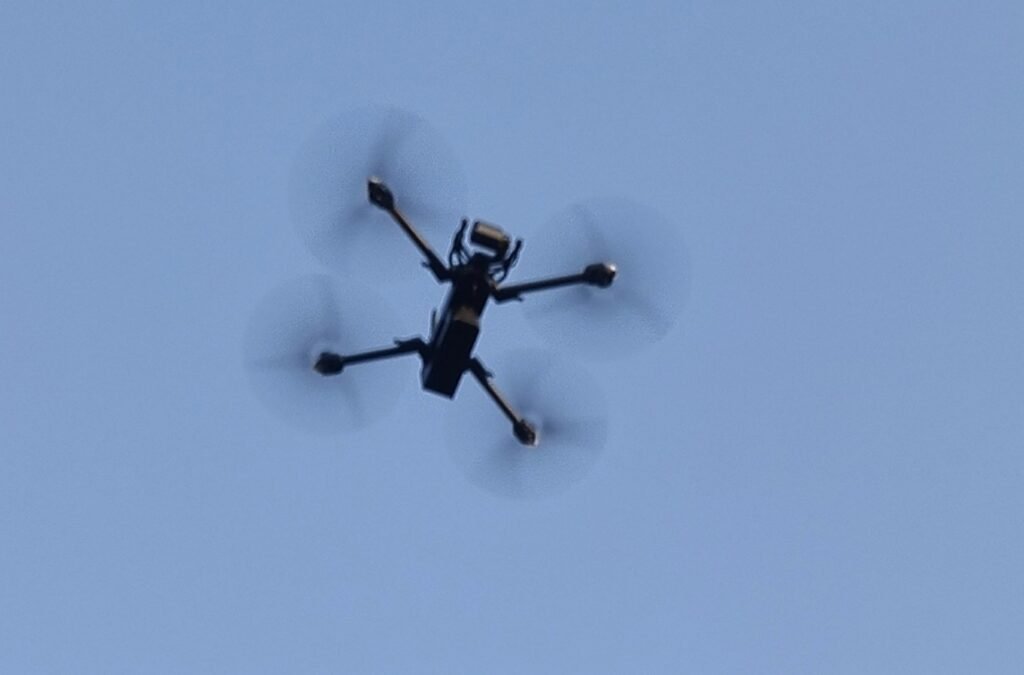
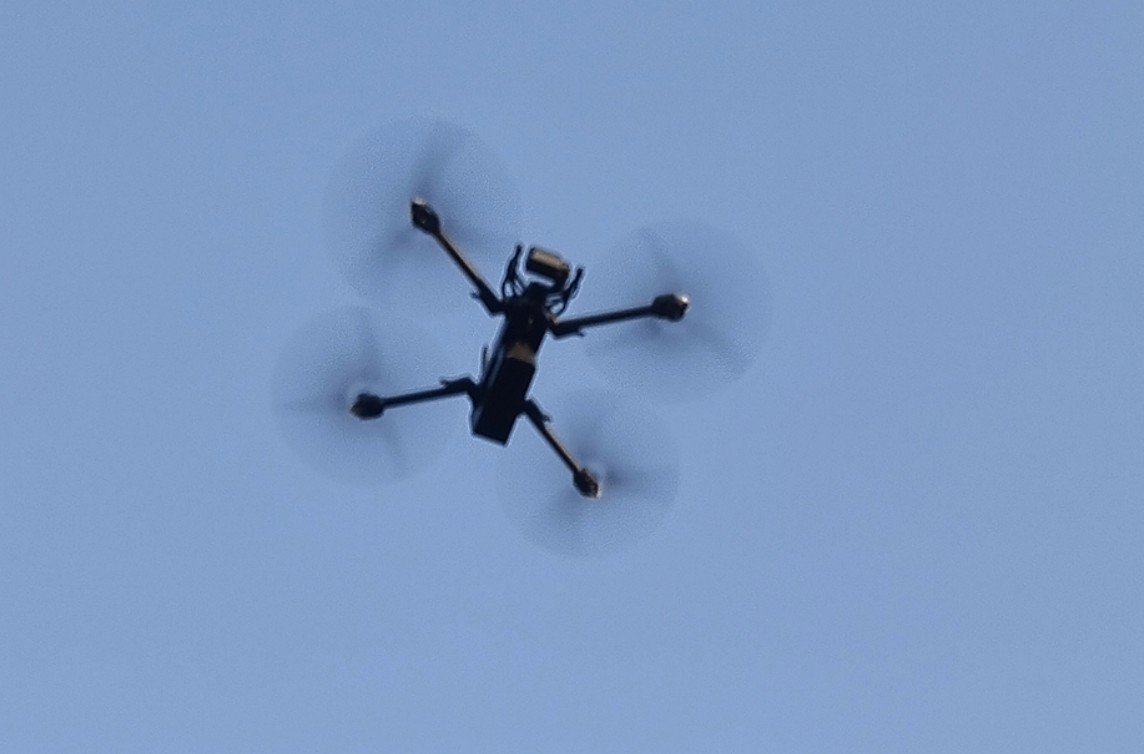
Jaipur, Nov 19 (IANS) A drone equipped with a camera, battery and dropping mechanism was found in a residential area of Sri Karanpur in Rajasthan’s Sri Ganganagar district, near the India-Pakistan border, on Thursday.
Security agencies have launched an investigation into its possible Pakistani connection. The quadcopter was spotted hovering over the residential area for some time before crashing onto a vacant plot.
The incident was reported to the police by local residents, following which police and security agency personnel rushed to the spot. The drone was found near Border Pillar No. 322/2, approximately 8 kilometres inside Indian territory from the international border, at around 12:30 pm.
Superintendent of Police Hari Shankar said the drone had been seized and a Forensic Science Laboratory (FSL) team was examining it.
As a precautionary measure, movement within a 100-metre radius of the site has been restricted, with police and Border Security Force (BSF) personnel deployed in the area.
According to Mohanlal, a councillor from Ward No. 10 in Sri Karanpur, he noticed the quadcopter flying over the residential locality and alerted the police. Shortly afterwards, the drone crashed onto the vacant plot.
The SP said the FSL team was examining the camera and chip recovered from the drone. Investigators are also probing whether the device has any connection with Pakistan.
In a related development, the Anti-Terrorism Squad (ATS) has reportedly uncovered a Pakistani connection in the November 3 blast on the Anupgarh-Suratgarh railway track in Sri Ganganagar district.
According to the investigation, a Pakistani agent allegedly lured a woman and a young man into a honey trap and paid them Rs 2.23 lakh to execute the attack.
The accused were allegedly trained through video calls on how to plant an improvised explosive device (IED) on the railway track.
Investigators suspect that the conspiracy, allegedly orchestrated at the behest of Pakistan’s ISI, was aimed at derailing an entire passenger train.
The ATS is probing the wider network and the involvement of suspected handlers across the border.
–IANS
arc/dan