


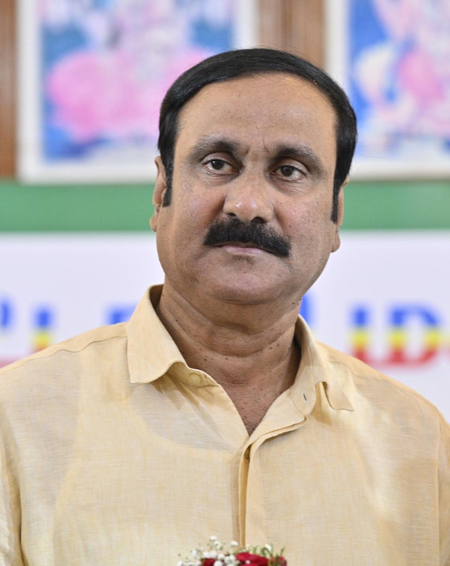
Chennai, July 26 (IANS) PMK president Dr Anbumani Ramadoss has urged the Union government to enact a nationwide law prohibiting children below the age of 16 from using social media, arguing that such a measure is essential to safeguard their physical health, mental well-being and academic future.
In a statement, Anbumani welcomed France’s decision to ban social media access for children under 15, describing it as a significant step toward protecting young people from the harmful effects of excessive digital exposure.
The French Parliament recently approved the legislation, which will prevent children below 15 from creating social media accounts from September, while existing accounts belonging to children in that age group will be suspended from January, when the law comes into full effect.
Anbumani noted that France has become the first country in the European Union to implement such a restriction. He pointed out that Australia was the first country to introduce a similar nationwide ban, which came into force in December 2025. He added that countries such as Canada, Brazil and Indonesia have also adopted comparable measures, while more than 50 nations, including the United Kingdom, Spain, Greece, Germany and Denmark, are considering similar restrictions.
Referring to India, he said there were compelling reasons for introducing a nationwide prohibition on social media use by children. Parents have repeatedly expressed concerns that children are increasingly exposed to inappropriate and explicit content online, leading to distraction, behavioural changes and other psychological problems.
He also cited the 2025–26 Economic Survey, which highlighted the adverse impact of excessive social media use on children’s mental and physical health.
According to the survey, prolonged exposure contributes to anxiety, stress, declining self-esteem and cyberbullying, with young people between the ages of 16 and 24 identified as particularly vulnerable.
The survey also recommended regulating children’s social media usage and reducing unnecessary online exposure.
Anbumani further said educators and university administrators have warned that social media addiction is diminishing students’ concentration, reading habits and academic performance.
Constant comparisons with curated online content, he said, undermine confidence and self-esteem while reducing attention spans. Studies have shown that many young users lose interest in videos within eight seconds, reflecting a shrinking ability to focus.
He also expressed concern that children are spending less time playing outdoor sports such as cricket and kabaddi, replacing them with online gaming. This shift, he said, has contributed to rising obesity levels and vitamin D deficiency among children.
Although Karnataka, Andhra Pradesh and Goa have announced plans to regulate children’s use of social media, Anbumani argued that states may lack the constitutional authority to impose such restrictions because communication falls under the Union List of the Constitution.
Any state-level ban, he said, could face legal challenges. Calling for decisive action, the PMK leader urged the Centre to follow the examples of France and Australia by introducing legislation that would ban social media access for children below the age of 16 across India, ensuring better protection for their health, education and future development.
–IANS
aal/uk