
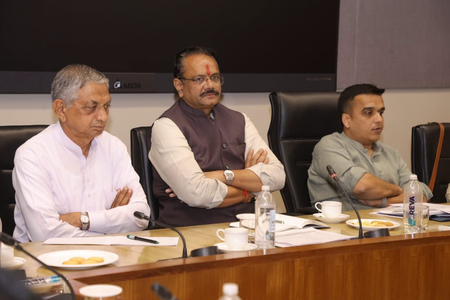
Gandhinagar, Nov 4 (IANS) Livestock farmers in Gujarat will be able to insure their animals for up to Rs 40,000 for a year by paying a premium of just Rs 229, with the state government bearing 85 per cent of the insurance cost under a livestock insurance scheme.
Announcing the initiative, spokesperson and Minister Jitu Vaghani said the government had set a target of covering one lakh animals under the Pashudhan Bima Sahay Yojana (Livestock Insurance Assistance Scheme) during 2026-27.
The scheme is being implemented in Gujarat under the Centre’s ‘National Livestock Mission’.
The state government provides insurance premium assistance of Rs 1,300 per animal, accounting for 85 per cent of the premium, while the livestock farmer pays the remaining Rs 229 to secure coverage of up to Rs 40,000 for one year.
Vaghani said, “The scheme is aimed at protecting livestock-rearing families from financial losses caused by the sudden death of animals, given that livestock is a major source of their livelihood.”
Each family can insure a maximum of 10 large animals or 100 small animals under the scheme. The eligible large animals include cows, buffaloes, horses, donkeys, camels, bulls, bullocks and male buffaloes.
For 2026-27, the Centre has approved an allocation of Rs 250 lakh for Gujarat under the scheme, of which Rs 115 lakh has been released as the first instalment.
The state government has separately approved Rs 55 lakh under its state-funded livestock insurance assistance scheme.
The government has received applications for insurance coverage for 87,147 animals through the i-Khedut portal so far. “The Animal Husbandry Department is making arrangements to bring all eligible applicants under the insurance scheme,” Vaghani said.
During the previous year, 48,695 animals belonging to 12,228 livestock farmers were insured under the scheme in Gujarat.
Appealing to livestock farmers to insure their eligible animals in time, Vaghani said, “The protection of livestock is the real financial security of a livestock farmer’s family.”
He also urged farmers to ensure that their animals’ identification tags remained intact and provide accurate details during registration to avoid difficulties in receiving assistance when required.
–IANS
mys/dan