


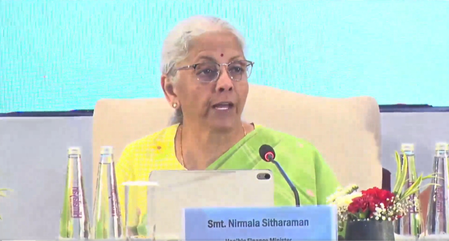
New Delhi, Oct 5 (IANS) Finance Minister Nirmala Sitharaman on Monday said that the next phase of Goods and Services Tax (GST) reforms will focus on making compliance simpler to advance Prime Minister Narendra Modi’s vision of a ‘Viksit Bharat’.
Sharing an article on LinkedIn, FM Sitharaman said the Next-Gen GST reforms were aimed at providing relief to taxpayers while giving greater momentum to the economy.
She said the rate changes introduced on September 22, 2025 were the first part of the reforms, while the next phase of process-related changes will come before the GST Council.
“The next phase of process reforms will come before the GST Council shortly,” FM Sitharaman said.
She said the reforms were designed to give households relief, provide businesses with greater certainty and make it easier for taxpayers to fulfil their obligations.
The minister also highlighted that the value of reported taxable supplies grew 25.8 per cent between October 2025 and July 2026 from a year earlier.
Moreover, Gross GST collections rose 11.6 per cent to Rs 12.46 lakh crore during April-September 2026.
GST collections recorded double-digit annual growth in every month from June through September, with collections during the four-month period rising nearly 15 per cent, according to her.
Meanwhile, Net GST collections (after refunds) grew 10.4 per cent during the first half of the financial year, she added.
Reported consumer sales or B2C supplies increased 26.7 per cent in the post-reform period, while GST registrations stood at about 1.71 crore at the end of August, up nearly 15 per cent from a year earlier.
Sitharaman said around Rs 1.80 lakh crore was refunded during April-September and called greater predictability in refunds important for businesses.
She also stated aggregate SGST receipts of states, including their share of IGST settlements, grew about 16 per cent during April-September.
The minister said proposals to be considered by the GST Council on October 7 have been developed in consultation with states and are aimed at reducing the time and cost of compliance.
She said a simpler and more predictable GST system would help enterprises, including small businesses in Tier-2 and Tier-3 cities, expand and contribute to India’s growth.
–IANS
ag/