


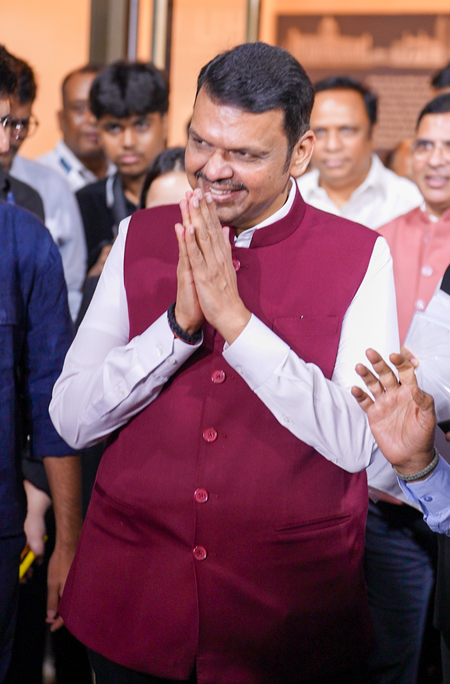
Mumbai, June 24 (IANS) Chief Minister Devendra Fadnavis on Wednesday in the state council announced that the Maharashtra government aims to provide daytime electricity supply to all farmers by the end of this year.
Currently, nearly 75 per cent of the state’s farmers are already receiving electricity during the day, and plans are underway to bring the remaining 25 per cent under the daytime power supply grid.
Responding during Question Hour to a query raised by legislator Sadabhau Khot, with follow-up questions from members Bachchu Kadu and Pravin Darekar, the Chief Minister reassured the House that Maharashtra is not facing any power shortage.
Agriculture pumps are regularly provided with eight hours of daily electricity in accordance with state regulations.
Addressing brief instances of load shedding earlier in May, Fadnavis explained that technical glitches had affected a few power plants simultaneously, causing short-term disruptions. However, he clarified that no load shedding is currently taking place across the state.
The Chief Minister highlighted the success of the Solar Agricultural Pump Scheme, which has adapted to varying geographical terrains. He noted that over 10 lakh solar pumps have been successfully installed across Maharashtra over the last three years, receiving an overwhelming response from the farming community.
To cater to diverse terrains, the government has deployed specialised models. Monopole and Booster Pumps are used to lift water from deep water resources, riverbanks, and flood zones. The Floating Solar Pumps scheme is implemented effectively across canals and open reservoirs.
For farmers located in “dark zone” areas with severely depleted groundwater levels, the government has structured special subsidies to provide higher-capacity models and booster pumps. Fadnavis added that solar pump users are entirely insulated from electricity billing issues.
To root out systemic flaws in the state’s power distribution networks, infrastructure projects worth approximately Rs 25,000 crore are underway under the Central Government’s Revamped Distribution Sector Scheme (RDSS). These operations focus on feeder separation, construction of new substations, installation of additional distribution transformers (DPs), and modernisation of the distribution network.
The Chief Minister expressed confidence that these upgrades will drastically minimise transformer failures over the next three years.
Looking ahead to the state’s growing energy requirements, Maharashtra has mapped out a strategy to achieve a power capacity of 78,000 Megawatts (MW) by the fiscal year 2031–32. To ensure efficient transmission of this capacity, work worth Rs 16,000 crore has already commenced under the Tariff-Based Competitive Bidding (TBCB) framework.
Over the next three years, the transmission sector is slated to receive an investment of nearly Rs 60,000 crore, the Chief Minister said.
Fadnavis also shared updates on the critical “Mumbai Islanding” project designed to secure the state capital’s grid against emergencies. Major transmission corridors have been completed, enabling the channeling of an additional 3,000 MW of power into Mumbai. This system ensures that Mumbai’s power grid remains uninterrupted during regional grid collapses or unforeseen emergencies.
Additionally, the Chief Minister remarked that Maharashtra has secured the top rank nationwide in rooftop solar installations under the PM-Surya Ghar Muft Bijli Yojana.
He urged residential housing complexes to widely adopt rooftop solar systems, noting that this could yield significant cost savings on shared monthly electricity bills.
–IANS
sj/dan