


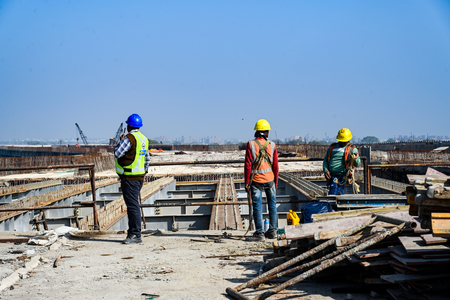
Mumbai, April 13 (IANS) The Maharashtra government on Monday released Standard Operating Procedures (SOPs) for protection of outdoor informal workers in urban heat risk districts of the state.
As per the advisory released by the state disaster management minister Girish Mahajan, rescheduling of outdoor work hours had been suggested to cooler periods from 6 A.M. to 11 A.M. and 4 P.M. to 8 P.M. during heat alerts, enforcement of mandatory rest breaks from 12 to 4 P.M. during orange and red alerts, mandating schedule shifts especially in construction, industrial and vending sectors.
Further, it will be necessary to issue official district or urban local body circulars mandating schedule shifts, especially in construction, industrial and vending sectors.
Workspace safety for women will be ensured through lighting, transport and protective facilities. The SOP was necessitated as Maharashtra ranks among India’s top 10 most heat vulnerable states and Union Territories.
According to the State Heat Action Plan, 15 districts across Vidarbha, Marathwada and Khandesh regions that have been identified as highly vulnerable to extremes heat are Latur, Amravati, Yavatmal, Washim, Akola, Buldhana, Nagpur, Wardha, Chandrapur, Gondia, Bhandara, Jalgaon, Nandurbar, Dhule and Nanded.
The SOP applies to all municipal corporations, municipal councils and nagar panchayats operating in high risk urban areas.
According to the SOPs, installation of water booths at major informal work locations including, markets, crossings, traffic junctions, transit hubs and vending areas will be necessary to ensure water access with clear signage and regular refilling.
The distribution of Oral Rehydration Solution (ORS) and electrolyte sachets through primary health Center’s, ward offices and NGOs will have to be done.
The parks and gardens need to remain open and accessible during afternoon hours, erection of temporary shade at vending areas, labour chowks, worker zones and traffic junctions will be done.
As far as medical preparedness and surveillance are concerned, the primary health centres and urban health centres will have to be stocked with ORS, IV fluids and heat illness treatment kits; there is a need to train ASHAs and ward health workers in heat-related illness and pre-position 108 ambulances in high vulnerability zones and monitor response time during high risk days.
The SOP mandates promotion of shaded public spaces, tree plantation, reflective surfaces and misting systems in urban planning and design and upgradation of dense work zones with permanent shade, cool roofs and water access and incentivising employers and market associations to install cooling infrastructure.
Meanwhile, the state government will set up a centre for training and research related to disaster management at Nagpur costing Rs 184 crore. The centre will be mandated to provide training and conduct research related to extreme heat conditions and sustainable cooling.
–IANS
sj/rad