


New Delhi, June 25 (IANS) On June 12, 1975, the Allahabad High Court invalidated the then Prime Minister Indira Gandhi’s election from the Rae Bareilly Parliamentary seat in Uttar Pradesh. She challenged the High Court’s decision in the Supreme Court. On June 24, while allowing her to continue as Prime Minister, Justice V.R. Krishna Iyer ordered that all privileges she received as an MP be stopped, and that she be debarred from voting. This was to continue till the resolution of her appeal.
But on 25 June 1975, then President Fakhruddin Ali Ahmed declared the imposition of the Emergency under Article 352, citing threats of internal disturbance.
A press release was issued by the government, accusing Opposition leaders of provoking unrest. This was India’s third declaration of Emergency, where the other two were during wars with China in 1962 and Pakistan in 1971.
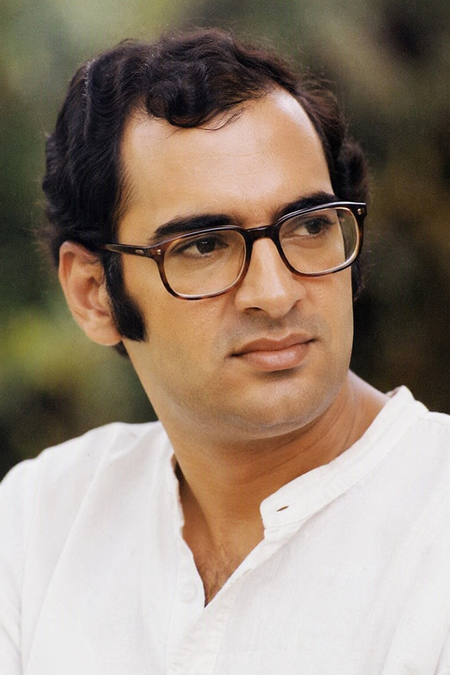
While Opposition leaders were jailed, dissenting voices were silenced. The period also marked the rise of Indira’s younger son, Sanjay Gandhi, who, people of those times claim, became the most powerful person without officially being in any office of power.
He used the Emergency to push authoritarian policies like forced sterilisations, slum demolitions, and his personal “five-point programme”, reshaping India’s politics and society in ways that remain controversial to this day.
Even before he turned 30, Sanjay Gandhi wielded immense influence despite not being an elected representative or minister. With many of Indira Gandhi’s advisors sidelined, he filled the vacuum and began directing bureaucrats and party leaders as if he were in charge.
While some of his five-point programme were progressive in theory – like adult education, dowry abolition, caste eradication, and instilling environmental awareness through afforestation drives – the coercive methods, especially in family planning and later, “beautification”, made the overall drive deeply unpopular.
Mass sterilisation saw the implementation of a forced exercise, where poor rickshaw pullers, beggars, and even sundry passersby were picked up and sterilised, many times under unsanitary conditions.
Rukhsana Sultana, then a member of Sanjay’s inner circle, pressured Muslim men and women to come to such “camps”, with cash incentives, and sometimes, coercion, where the police began rounding up daily “quotas” for sterilisation. In the village of Uttawar, then part of Gurgaon district in Haryana, over 800 incidents were said to have been carried out under coercion.
Incidentally, it was a Meo Muslim-majority village. The larger programme was part of a broader strategy to control population growth, but was marked by significant human rights violations.
And under his “beautification programme”, slums and old city areas were targeted, with the demolitions at Delhi’s Turkman Gate carried out between February and April, 1976, highlighting the whole scope of the attempt. The reason: When Sanjay visited Turkman Gate, he did not like the skyline, where the buildings blocked the view of Jama Masjid.
Hundreds were allegedly killed, with unofficial estimates running beyond 1,000, and bulldozers were used to clear bodies and rubble under floodlights at night. Bulldozers were also called in to clear homes even as residents resisted, calling a general strike. The police responded with lathi-charges, teargas, and eventually resorted to firing on protesters, including women and children, say reports.
Following the fall of the Indira Gandhi-led Congress from power in 1977, the Janata Party government set up the Shah Commission of Inquiry to investigate the excesses committed during the Emergency period. Headed by Justice J.C. Shah, the commission examined abuses of power, including mass detentions, censorship, forced sterilisations, and slum demolitions.
The Commission reports highlighted how civil liberties were trampled, institutions were misused, and Sanjay Gandhi exercised extra-constitutional authority. The commission indicted several senior officials and directly criticised Indira Gandhi and Sanjay Gandhi for their roles. However, when Indira Gandhi returned to power in 1980, the reports were shelved, and no significant action was taken, leaving the findings as a stark reminder of how fragile democratic safeguards can be when concentrated power goes unchecked.
–IANS
jb/snj/skp