


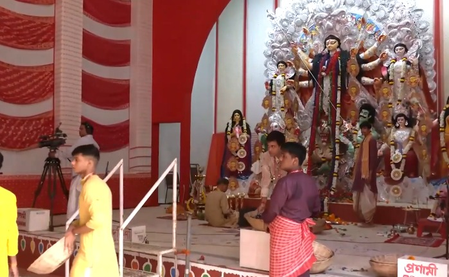
New Delhi, Oct 17 (IANS) Devotees gathered at the CR Park Kali Bari Temple in South Delhi on Saturday to celebrate Maha Saptami, participating in traditional rituals and offering prayers to Maa Durga amid religious fervour.
Speaking to IANS, CR Park Kalibari Temple President Rajiv Nag said the temple holds a special place in the cultural and religious heritage of the area.
“CR Park’s heritage is centred around this temple. The main centre of CR Park is this Kali Mandir, where worship has been taking place since 1973. Every year, the celebrations are held with great devotion and religious fervour. There are other major pujas in CR Park, but this puja is marked by deep devotion, making it one of the most important celebrations in the area,” he said.
Nag added that several dignitaries were expected to visit the temple during the celebrations, while devotees remained the primary focus of the arrangements.
“The Health Minister is visiting us today, and we welcome them. The Lieutenant Governor will also visit, along with several others. Everyone is welcome, especially the devotees. We receive a large number of devotees and ensure that they have a meaningful spiritual experience,” he said.
In 2025, Prime Minister Narendra Modi had visited a Durga Puja pandal in South Delhi’s CR Park neighbourhood on the auspicious occasion of Maha Ashtami. He offered prayers to Goddess Durga amid the chanting of mantras and performed an ‘aarti’ at the iconic Kali Bari Temple. He also participated in celebrations reflecting traditional Bengali culture.
Saturday marks the seventh day of Navratri, dedicated to Maa Kalaratri, one of the nine forms of Goddess Durga. The day coincides with Maha Saptami, an important occasion in Bengal’s Durga Puja celebrations, when devotees perform special rituals and offer prayers to the Goddess.
Maa Kalaratri is regarded as one of Durga’s fiercest manifestations and is associated with the destruction of evil, ignorance and negative forces. Despite her formidable appearance, she is also worshipped as a protective and benevolent deity who blesses devotees with courage and fearlessness.
Her worship is believed to help devotees overcome fear, obstacles and adversity. The Goddess symbolises the power to confront darkness and face difficult circumstances with strength and determination.
During Navratri, devotees offer prayers, perform ‘aarti’ and sing devotional hymns dedicated to the Goddess. Rituals and offerings vary according to family customs and regional traditions. Grey is traditionally associated with the seventh day of Navratri, symbolising balance, composure and resilience.
–IANS
jk/rad