


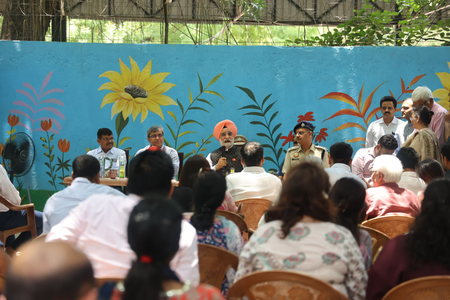
New Delhi, June 23 (IANS) Lieutenant Governor T.S. Sandhu on Tuesday visited Navjeevan Vihar in south Delhi and praised the neighbourhood’s resident-driven zero-waste system.
Sandhu also encouraged other RWAs across the city to study and adopt Navjeevan Vihar’s decentralised model and prioritise source segregation for sustainable waste management.
In a message on X, he said, “Visited Navjeevan Vihar today, an inspiring model of a ‘Zero Waste Colony’ in the capital. Inspected their Reduce-Reuse-Recycle (RRR) Centre, decentralised composting units, source-segregation mechanisms, and the locally installed rainwater harvesting system.”
“This remarkable community-led transformation reflects the vision of Hon’ble Prime Minister Shri @narendramodiJi’s Mission LiFE and the principles of a circular economy under the Waste to Wealth initiative,” said Sandhu.
“I commend the dedicated efforts of the RWA and residents for sustaining this model for nearly eight years and successfully diverting over 10 lakh kilograms of waste from Delhi’s landfill sites,” he said.
“The journey from waste to wealth begins at home. Sustainable waste management cannot be achieved by government efforts alone; it requires active public participation and lasting behavioural change. I urge RWAs across Delhi to study and adopt this decentralized model, prioritize source segregation, and work collectively towards building a cleaner, greener, and more sustainable #ViksitDilli,” said Sandhu.
This exemplary community-driven initiative demonstrates how collective civic responsibility can create a cleaner, greener, and more sustainable urban environment, he said.
The residents’ commitment to waste segregation, recycling, composting, and water conservation is indeed commendable. Such RWA efforts deserve our full support and assistance, said the Lieutenant Governor.
During the visit, the Lieutenant Governor held an open house with the colony residents, sharing ideas and listening to the suggestions from citizens. The resident also took Sandhu on a guided tour of the facilities for garbage segregation, composting and depositing used items like clothes and stationery.
The colony kids also shared with him paintings made on the theme of waste management and rainwater harvesting.
–IANS
rch/uk