


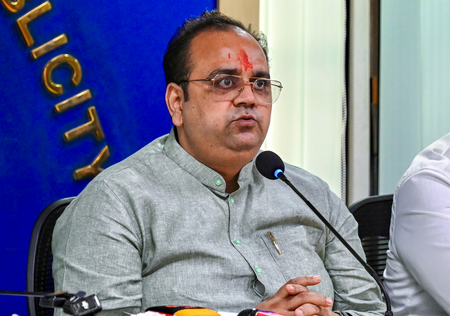
New Delhi, Aug 24 (IANS) Delhi Health Minister Dr Pankaj Singh on Monday called a high-level meeting to discuss the current situation and preparedness for the prevention and control of H1N1 (swine flu) and vector-borne diseases in the national capital.
The meeting is scheduled to be held at 2 p.m. at the Delhi Secretariat and will be attended by senior officials of the Health Department.
During the meeting, the Health Minister is expected to review the prevailing situation and the measures being taken to prevent and control the spread of various seasonal and vector-borne diseases. Discussions are also likely to focus on hospital preparedness, surveillance systems and the Health Department’s readiness to deal with a possible rise in cases.
The meeting will specifically review the situation and the steps being taken to prevent the spread of diseases such as swine flu, dengue, malaria and chikungunya.
Dr Pankaj Singh is expected to seek detailed information from officials regarding the current disease situation across Delhi. He may also provide directions on strengthening field-level surveillance and enhancing the Health Department’s preparedness to tackle potential cases in the coming days.
The meeting is being considered significant in view of the increased risk of seasonal and vector-borne diseases during the monsoon season in Delhi.
Meanwhile, Safdarjung Hospital said it is fully equipped to manage patients suffering from swine flu, or H1N1 influenza, as well as other seasonal illnesses. The hospital said that necessary medicines, treatment facilities and supportive care are available for patients.
Delhi recorded 159 fresh influenza cases on August 20, including 114 cases of H1N1, taking the cumulative H1N1 tally in 2026 to 1,777. Influenza A cases have also risen to 2,392. H1N1 is a subtype of Influenza A and is commonly known as swine flu.
The national capital has reported a total of 2,602 influenza cases so far in 2026, including 2,392 cases of Influenza A and 210 cases of Influenza B. Four fresh Influenza B cases were reported on August 20, taking the cumulative tally to 210.
H1N1 is a subtype of the Influenza A virus that causes respiratory illness. It became widely known as “swine flu” during the 2009 influenza pandemic and subsequently became one of the seasonal influenza viruses circulating among humans.
Common symptoms of influenza include fever, cough, sore throat, headache, body aches, fatigue, and a runny or blocked nose. In many cases, people recover within a few days to about a week.
However, influenza can sometimes lead to serious complications, particularly among older adults, young children, pregnant women and people with certain underlying health conditions. Severe respiratory symptoms, persistent high fever, difficulty breathing, chest discomfort, confusion or a worsening condition may require prompt medical evaluation.
Influenza spreads mainly through respiratory droplets and particles released when an infected person coughs, sneezes or talks. Maintaining good hand hygiene, covering coughs and sneezes, and avoiding close contact with unwell people can help reduce transmission.
Seasonal influenza vaccination is also an important preventive measure, particularly for people at a higher risk of complications.
–IANS
jk/dpb