


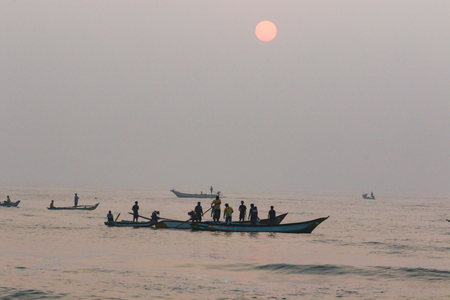
Kochi, Sep 2 (IANS) Climate change is increasingly putting the livelihoods of India’s small-scale fishers at risk, with tising temperatures, rough seas, stronger storms, and changing monsoon patterns affecting both fishing days and catches, warns a new assessment.
The new diagnostic assessment, prepared by the Bay of Bengal Programme Inter-Governmental Organisation (BOBP-IGO), with the support of national experts and technical guidance from the Food and Agriculture Organisation (FAO), of the sector has identified climate change and disaster risks as major concerns for small-scale fishing communities.
The assessment comes as India moves into the next stage of preparing a National Plan of Action for Small-Scale Fisheries (NPOA-SSF).
A draft of the national plan is expected by November 21.
The report says fishers are already noticing major changes in weather and fishing conditions.
They have reported rising temperatures, changing seasons, and stronger storms.
Monsoon patterns have also become less predictable.
Changes in fish availability are another major concern.
Fishers have reported changes in the presence of different species and a decline in catches of some traditional varieties, including sardines.
The impact of climate change is also seen in the number of days fishers are able to go to sea.
Rough seas, cyclones, and storm surges can keep fishing boats on shore for several days.
For small fishers, the loss of even a few fishing days can have a direct impact on household income.
The report points out that all fishing communities do not face the same level of risk.
The impact depends on the type of fishing unit, access to infrastructure, and financial resources.
The ability of families to recover after a disaster is also important.
BOBP-IGO Director Dr P. Krishnan said climate risks must be addressed along with the other problems faced by small-scale fishers.
The assessment also highlights several long-standing problems in the sector.
These include poor market access, inadequate storage and processing facilities and difficulties in getting fair prices for catches.
Safety at sea is another concern.
Many small fishers lack access to adequate safety equipment and weather information.
Fishing harbours and landing centres also need better infrastructure.
The report also calls attention to the role of women in fishing communities.
Women play an important part in post-harvest activities and other related work. Yet their participation in decision-making and resource management remains limited.
The assessment has proposed a nationwide audit of disaster-management infrastructure in fishing areas.
It has also called for the identification of vulnerable coastal areas and better compensation systems after disasters.
Other recommendations include stronger boats, improved weather forecasts, better post-disaster support, skill development, and alternative livelihood opportunities.
The findings are expected to feed into the proposed national action plan.
The plan will seek to address the economic, social and climate-related challenges facing India’s small-scale fishing communities.
–IANS
sg/vd