


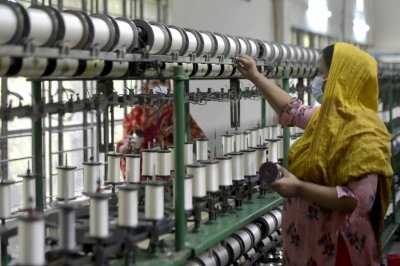
New Delhi, Aug 23 (IANS) The impact of the gas crisis in Bangladesh, which began on July 21, is spreading across the country’s industrial belts, with factories cutting production, shutting units and sending workers on leave, according to a Bangladeshi media report.
The latest deterioration follows the shutdown of Excelerate Energy’s LNG terminal after it ran out of inventory on Wednesday, further reducing gas availability in an already strained system. Most of the gas supplied to the national grid is being consumed by power plants, leaving not much for industries that depend directly on gas for boilers, production processes and captive power, the report in Dhaka’s The Daily Star newspaper said.
The crisis has hit textile, garment, steel, glass, food processing and other gas-dependent industries, while factories using gas-fired boilers and captive power plants are being forced to switch to costlier alternatives.
All the industrial areas have been facing acute gas shortages again after a partial recovery last week. In Narsingdi, where more than 100 textile factories have halted production in the last two days as gas pressure fell to almost zero, the report states.
Factory owners said gas pressure, which had gradually declined before the latest crisis, fell from the normal 15 pounds per square inch (PSI) to 2-4 PSI last week and then to almost zero over the past few days.
Narsingdi supplies nearly 70 per cent of the country’s clothing, said Nizam Uddin Bhuiyan, President of the Narsingdi Textile, Dyeing and Printing Association.
The crisis is also sharply affecting garment factories in Gazipur, Narayanganj and Savar. Many factories are dividing workers into shifts, resulting in production losses of around 20-25 per cent, according to information provided by factory authorities.
Generators that normally run on gas are now being operated with fuel oil, increasing costs nearly fivefold.
Over in Mymensingh’s Bhaluka industrial area, workers at 20 factories were partially sent on leave yesterday. Of the 293 factories in the area, 99 are gas-powered, and almost all are currently facing a gas crisis, said Industrial Police-5 Superintendent Md Ansar Uddin.
Titas Gas’s Bhaluka regional office said pressure in the area’s two gas lines has fallen from 140 PSI and 50 PSI to 30-50 PSI.
The disruption is forcing factories to bear wages despite lower or zero production, while delayed supplies are threatening shipment schedules and raising the risk of costly air freight.
In Gazipur, factory authorities said workers are being divided into shifts to keep production going. If the situation continues for a long time, there is a risk of labour unrest, work stoppages or protests.
“It is not just garment factory owners who are suffering — the crisis is also affecting workers and our national economy,” said Morshed Sarwar Sohel, a Vice President of the Bangladesh Knitwear Manufacturers and Exporters Association.
Factories in the Chattogram export processing zone, Karnaphuli EPZ and industrial areas in Bayezid and Kalurghat are also operating far below capacity because of extremely low gas pressure, the report states.
–IANS
sps/vd