
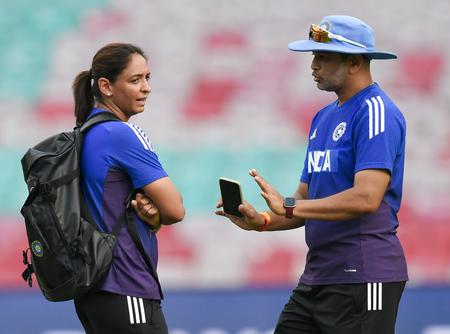
New Delhi, Nov 3 (IANS) India head coach Amol Muzumdar revealed that he decided to confront the team’s shortcomings inside the dressing room following their defeat to England during the ICC Women’s Cricket World Cup 2025, believing that a direct intervention was necessary to change the team’s fortunes.
Muzumdar said he chose to address the players despite reservations from members of his support staff, as India’s third defeat in the group stage had made it clear that the team needed to respond.
The loss against England was particularly disappointing for the Indian camp, with the side having entered the contest expecting to secure a convincing victory. However, their inability to close out the match prompted Muzumdar to take a different approach in his communication with the players.
Recalling the circumstances that led to his decision, the India head coach said he felt another routine team discussion would not be enough to bring about the desired change.
“The group stage match against England, which we were supposed to win by a nice margin, we were not able to finish and ended up losing. That was our third defeat of the World Cup, and I wasn’t happy about it, nor were the players. I decided we had to make something happen there. Unless we took action, nothing was going to change.
“My support staff did mention, ‘not now, Amol.’ But I decided otherwise. I said, ‘no, if not now, then never.’ So that was when I stepped in. I mentioned to shut the windows because I didn’t want the public to see it, but at the same time, it was needed. I just said what I felt through my heart. It was great on the team’s part that they took it positively because it was meant for the betterment of the team. I was thankful they took it that way,” Muzumdar told JioStar.
Muzumdar explained that his intervention was driven by the gap between the potential he saw within the squad and what the players were managing to produce during matches. He believed that the team’s considerable individual ability needed to translate into performances when it mattered most, rather than remaining restricted to practice sessions and discussions away from the field.
The coach also acknowledged the players’ response to his message, saying he was appreciative of the manner in which the dressing room received his words despite the intensity of the conversation.
“Everyone knows how beautifully talented these players are. I was lucky to be handling players with immense talent. Unless you showed that talent on the field, it wasn’t going to culminate into a result. You could speak in the dressing room, in the meetings, in the drawing rooms or in the hotels, but unless you showed it on the ground, that’s where it mattered. So, I just wanted them to realise that,” he added.
–IANS
vi/bc