
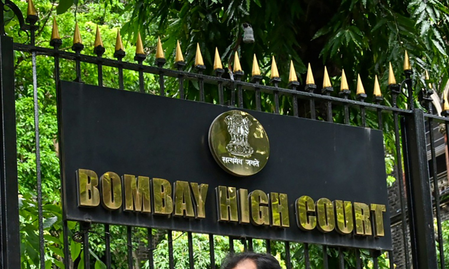
Kolhapur, Nov 9 (IANS) In a major legal development, the Aurangabad bench of the Bombay High Court on Monday cleared the deck for the Kolhapur District Cooperative Milk Producers’ Union (Gokul Dairy) chairman election to proceed as scheduled on Tuesday, November 10.
However, in a key conditional ruling, the court directed that while the four newly government-appointed expert directors will be allowed to cast their votes, their ballots will remain sealed and kept secret pending the outcome of the next hearing set for November 25.
The ruling follows intense political friction surrounding the Maharashtra government’s decision to issue an ordinance enabling the appointment of government-nominated expert directors with voting powers in major cooperative bodies.
The government’s move to promulgate ordinance comes to address the quorum issue and address the administrative deadlock.
The Congress-led alliance had won 13 of the 25 seats and 12 seats by the Mahayuti alliance; though, to complete quorum, the presence of 14 members was needed to complete the Chairman’s election process.
The Maharashtra Dairy Development Department today designated four experts as non-political/expert directors to break the quorum deadlock on the Kolhapur District Cooperative Milk Producers’ Union (Gokul Dairy)board. They included Shivaji Dinkar Adnaik (Yavluj) – Retired Banking Official, Dr Pravinchandra Hendre (Kolhapur) – Medical/Sector Expert, Krishnat D Patil (Kenwade) – Chartered Accountant and Adv Prashant Patole (Sangli) – Legal Expert. The government also named Assistant Registrar Krishna Thackeray as the official government ex-officio representative nominee.
The Maharashtra government has promulgated an ordinance under Section 73AAA of the Maharashtra Co-operative Societies Act, 1960, allowing state-nominated expert directors with voting rights on large cooperative boards, including the Kolhapur District Co-operative Milk Producers’ Union (Gokul Dairy). The four government-appointed expert directors are permitted to participate in the voting process, but their individual votes will be kept sealed in court custody.
Senior advocates representing the petitioners argued in court that issuing such an ordinance on the eve of a scheduled election undermines the democratic framework of cooperative institutions.
In response, government counsels maintained that expert appointments are legally valid and aimed at enhancing administrative efficiency and protecting state interests.
With the High Court refusing to stay the election while keeping the outcome contingent on the legal validity of the four nominated votes, all eyes now turn to tomorrow’s voting procedure and the upcoming judicial review on November 25.
The court ordered complete videography of the election process to ensure transparency and prevent procedural irregularities. The High Court has set November 25 as the next date of hearing to adjudicate on the constitutional validity and legality of the government’s ordinance.
The legal dispute erupted after the state cabinet last week approved an amendment permitting government-nominated expert directors on boards of major cooperative unions.
Opposition parties and directors associated with the Congress-led alliance strongly contested the move, alleging that it was designed to alter the numerical balance in the board of directors where elected seats were tightly split.
Earlier, Congress legislator Satej Patil, who led the opposition alliance, accused the government of overriding the democratic votes of 5.5 lakh dairy farmers who voted his panel into power. He termed the retroactive legislative change an “assault on co-operative democracy”.
Patil publicly questioned the selection of nominees, pointing out that one nominee (Adv Prashant Patole) belongs to neighbouring Sangli district rather than Kolhapur, and questioning why non-dairy professionals were chosen over local milk producers.
He alleged that the ruling alliance’s manoeuvres are part of a broader push to undermine local co-operatives and clear the path for outside private entities (such as Amul) to dominate the regional milk markets.
Congress leader Rahul Gandhi and former Chief Minister Prithviraj Chavan publicly condemned the decision, describing the post-election rule change as a manipulation of electoral mandates.
However, Chief Minister Devendra Fadnavis clarified that the government’s intervention was purely technical to resolve an administrative deadlock rather than a political attempt to take over the dairy cooperative. Neither faction held enough votes to complete the mandatory quorum required to elect the chairman.
The election meeting had already been cancelled twice due to a lack of quorum, which risked cancelling the election cycle entirely.
He emphasised that the state government acted strictly within statutory bounds. The decision to pass an ordinance nominating board members to enable voting was taken after consulting the Advocate General of Maharashtra to ensure legal validity.
Meanwhile, thousands of farmers, dairy producers, and opposition leaders converged on Dasra Chowk today for a massive ‘Sangharsh Morcha’ (Struggle March).
Organised amidst the festive backdrop of Diwali, the rally targeted the state government’s controversial ordinance enabling the appointment of government-nominated directors with voting rights to institutions with turnovers exceeding Rs 500 crore—a move they charge is explicitly engineered to capture control of the Rs 3,000-crore Gokul Milk Union (Kolhapur District Cooperative Milk Producers’ Union).
They further alleged that by granting voting rights to four of these nominees, the ruling Mahayuti alliance is attempting to engineer a majority to capture the chairmanship of the cooperative dairy.
The atmosphere in Kolhapur remains highly charged, with protesters displaying symbolic items, including traditional Kolhapuri chappals (footwear), alongside creative banners and posters.
–IANS
sj/dan