


New Delhi, Sep 28 (IANS) More than Rs 1,730 crore has been released directly to states under the Grants-in-Aid component of the Pradhan Mantri Anusuchit Jaati Abhyuday Yojna (PM-AJAY) from FY 2021-22 to FY 2025-26, extending skilling and livelihood support to over 2.5 lakh individual and group beneficiaries, an official statement said on Monday.
PM-AJAY is a merger scheme of three erstwhile centrally sponsored schemes — Pradhan Mantri Adarsh Gram Yojana (PMAGY), Special Central Assistance to Scheduled Castes Sub Plan (SCA to SCSP) and Babu Jagjivan Ram Chhatrawas Yojana (BJRCY).
It is transforming SC-majority villages into ‘Adarsh Grams’ (model villages) by filling critical gaps in infrastructure and services.
According to the government factsheet, the Adarsh Gram component has covered 47,243 villages, benefiting more than 47.79 lakh citizens across the country.
A total of 46,944 development works has been completed, while 27,032 Village Development Plans (VDPs) have been prepared.
As on September 8, 2026, 18,093 villages have been declared as Adarsh Grams, reflecting significant progress in improving infrastructure, basic services and quality of life in Scheduled Caste-majority villages.
The construction and repair of hostels is one of the means to enable and encourage students belonging to Scheduled Castes (SC) to attain quality education.
As of September 2026, a total of 785 student hostels has been completed. The government has allocated central assistance of Rs 61.46 crore for FY 2026-27 for construction of two hostel projects (one for girls and one for boys) to provide accommodation for 264 students.
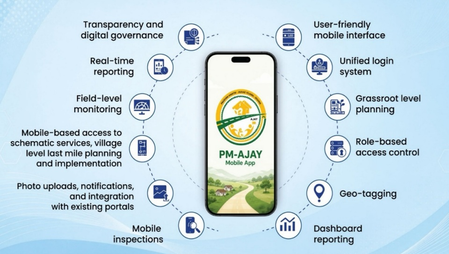
Moreover, the recent launch of the ‘PM-AJAY’ Mobile App and ‘PM-AJAY’ Portal aims to transition from paper-based workflow and processing to an end-to-end digital workflow and processing on a real-time basis.
PM-AJAY plays a significant role in advancing the socio-economic and educational empowerment of Scheduled Caste communities through targeted interventions that promote sustainable livelihoods, quality education, and improved infrastructure.
As the scheme continues to expand, greater use of technology, stronger monitoring mechanisms, and last-mile delivery are enhancing its effectiveness and outreach, said the factsheet.
–IANS
na/