


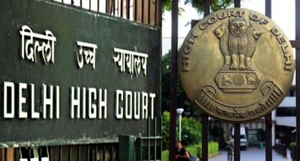
New Delhi, Sep 2 (IANS) The Delhi High Court on Wednesday issued notice on a Public Interest Litigation (PIL) seeking 50 per cent reservation for female students in the Delhi University Students’ Union (DUSU) and college students’ union elections.
A Division Bench of Chief Justice Devendra Kumar Upadhyaya and Justice Tejas Karia issued notice in the petition filed by Shabana Hussain and posted the matter for hearing in November.
The petition seeks directions to the Union government, University Grants Commission (UGC), Delhi University and the Chief Election Officer for DUSU elections to reserve 50 per cent of seats for female students in DUSU and college students’ union elections on a rotational basis.
The plea contends that despite women constituting a substantial proportion of Delhi University’s student population, their representation in elected student bodies remains disproportionately low. It argues that the existing electoral environment, including the alleged influence of money and muscle power, violence and other irregularities, has discouraged women students from contesting and participating meaningfully in student elections.
The petitioner has also raised concerns over the representation of issues directly affecting female students, including sexual harassment, safety and hostel curfew timings, in student union politics. The plea states that “political participation is not limited to the right to vote” and includes meaningful representation, participation in decision-making and policy formulation.
“Merely permitting women to contest elections without ensuring adequate representation does not result in substantive equality,” contends the petition, filed through advocate Ashu Bidhuri. It further submits that greater participation of female students in university and college-level governance is essential for developing future women leaders and strengthening democratic participation.
The petitioner has relied upon the Nari Shakti Vandan Adhiniyam, which provides for reservation for women in the Lok Sabha and state legislative assemblies, to contend that the principle of greater political representation for women should also be reflected in student governance.
The plea also refers to the Uttarakhand government’s decision mandating 50 per cent reservation for female candidates in student union elections in state universities. It claims that several colleges affiliated with Delhi University and institutions outside Delhi have also adopted provisions providing reservation for female students in student union elections.
The petition further refers to the recommendations of the Lyngdoh Committee, which were introduced to reform student elections and curb the influence of money and muscle power, and alleges that continued violations of the prescribed norms have adversely affected the fairness and inclusiveness of the electoral process.
Petitioner Hussain had earlier approached various authorities through representations seeking 50 per cent reservation for female students. The petition states that representations were submitted to Delhi University authorities in October 2023 and subsequently to the Union government and university authorities in 2024.
The present PIL was instituted after Delhi University issued its notification for the DUSU elections on August 13, 2026. The matter also has a previous history before the Delhi High Court.
In September 2024, the High Court had declined to judicially examine a similar plea seeking 50 per cent reservation for women in student union elections, while directing Delhi University to decide within three weeks on a representation made by Hussain, then an MA (Buddhist Studies) student at the university’s Arts Faculty.
A Bench headed by then Acting Chief Justice Manmohan had asked the university administration to take a decision on the representation and orally directed it to ensure the safety and security of women students during the election process.
The earlier plea had highlighted that women constituted around 53 per cent of Delhi University’s students, but their political participation and representation in DUSU and college student unions remained low. It had argued that issues such as sexual harassment, hostel curfew timings and safety often failed to receive adequate attention in student election manifestos because of the lack of adequate representation of women.
Hussain, who had served as Vice President of the student union at Delhi University’s Deshbandhu College in 2017, has sought directions to ensure gender parity and meaningful participation of women in student governance.
–IANS
pds/uk