


BENGALURU: Karnataka’s plan to undertake cloud seeding from September 20 to tackle drought-like conditions in parts of the state could be delayed, with weather experts warning that prevailing atmospheric conditions are not conducive for the exercise.
At several meetings, including one held on Monday, experts advised the state government against rushing into cloud seeding. They suggested postponing the operation until October, when weather conditions are expected to become more favourable. With the southwest monsoon likely to continue until around October 10, the state has some additional window to undertake the experiment.
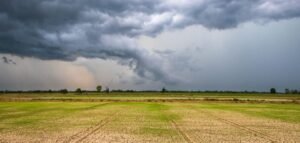
A senior official from the Karnataka State Natural Disaster Monitoring Centre (KSNDMC) said cloud seeding can be attempted only when suitable clouds are available. “At present, there are no clouds of the required type and density. Forecasts for the coming weeks also do not indicate conditions favourable for cloud formation,” the official said.
Experts said cloud seeding requires sufficiently dense cumulus or cumulonimbus clouds, adequate atmospheric moisture, favourable wind movement and suitable weather systems. An IMD official said moisture levels of around 55-60mm through the atmospheric column, along with favourable wind conditions and a low-pressure trough over the sea, are among the requirements.
The absence of thunderstorm-bearing cumulonimbus clouds is another major hurdle. Such clouds are generally more common during the northeast monsoon and can provide better conditions for cloud seeding.
Representatives of the Karnataka Irrigation Corporation, Rural Development and Panchayat Raj Department, IMD, KSNDMC, IISc, IITM, Water Resources Department and other experts attended Monday’s meeting to review the monsoon pattern and rainfall deficit.
An IMD official said weather systems over the Arabian Sea have been weaker this year compared with those over the Bay of Bengal. While the monsoon trough near the Western Ghats has helped bring rain to coastal and northern Karnataka, interior and south interior Karnataka have continued to face rainfall deficits.
Experts therefore recommended that the government wait for suitable cloud formations rather than conduct cloud seeding under unfavourable conditions, which could result in the exercise yielding little or no benefit.