


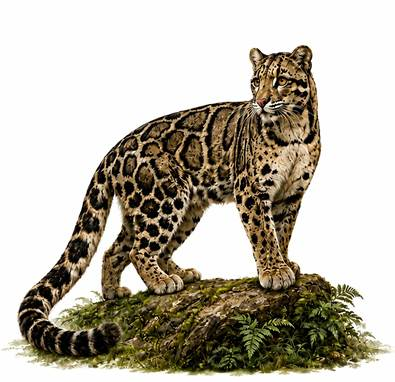
New Delhi, Aug 4 (IANS) Fourteen priority conservation landscapes across Northeast India, along with habitat restoration and forest corridor conservation, are key components of the Clouded Leopard Conservation Action Plan (CAP), said the environment and forest ministry on Tuesday.
On the occasion of International Clouded Leopard Day, India reaffirmed its commitment to the conservation of one of Asia’s most elusive wild cats through CAP, prepared under the Government of India–GEF–UNDP initiative, the Ministry of Environment, Forest and Climate Change said in a statement.
International Clouded Leopard Day is observed annually on August 4 to raise global awareness for the protection, conservation, and unique traits of these elusive wild cats. Founded in 2018, the awareness day highlights the major threats facing the species across South and Southeast Asia.
The conservation of the Clouded Leopard is intrinsically linked with the conservation of the forests and natural heritage of Northeast India, it said.
Through the Conservation Action Plan, India is advancing a coordinated approach that combines habitat protection, scientific monitoring, landscape restoration, involving technology, community participation and international cooperation to secure the future of this remarkable wild cat, it said.
The government has also strengthened the institutional framework for Clouded Leopard conservation through the inclusion of the species under the Species Recovery Programme of the Integrated Development of Wildlife Habitats (IDWH) scheme, it said.
The Action Plan CAP was released during the 91st meeting of the Standing Committee of the National Board of Wild Life (SCNBWL), held in July at Coimbatore.
The action plan provides a comprehensive framework for securing habitats, restoring forest connectivity, strengthening scientific monitoring and empowering local communities for conservation of the species, said the statement.
The CAP provides for standardised scientific monitoring through camera traps, occupancy surveys, genetics and environmental DNA (eDNA), enabling improved understanding of the species and its habitat requirements.
It also emphasises strengthening anti-poaching measures and wildlife crime prevention. Capacity building of frontline staff is another important component, including the use of the M-STrIPES smart application to strengthen field-level conservation efforts, said the statement.
Recognising the critical role of local communities in wildlife conservation, the Action Plan promotes community-based conservation and sustainable livelihood support.
–IANS
rch/dan