


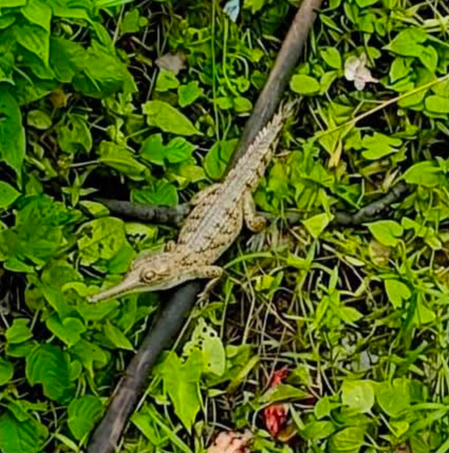
Guwahati, June 30 (IANS) The sighting of a juvenile gharial in the Kekaidong River in West Karbi Anglong has been hailed by Assam Chief Minister Himanta Biswa Sarma as a significant indicator of the state’s improving riverine ecosystem and ongoing biodiversity conservation efforts.
Sharing photographs of the reptile on social media on Tuesday, the Chief Minister said healthy rivers narrate their own story, and the latest sighting reflects the gradual revival of Assam’s natural ecosystems.
“The sighting of a juvenile gharial in the Kekaidong River, West Karbi Anglong, reflects the steady revival of Assam’s natural ecosystems. It encourages us to remain steadfast in protecting the rich biodiversity that defines our State,” CM Sarma posted.
The gharial (Gavialis gangeticus), one of the world’s most critically endangered crocodilian species, is known for its long, narrow snout and dependence on clean, free-flowing rivers.
The species has witnessed a drastic decline across the Indian subcontinent over the past several decades due to habitat degradation, sand mining, river pollution, dam construction and declining fish populations.
A wildlife expert said that the presence of juvenile gharials is particularly encouraging as it indicates successful breeding and favourable ecological conditions capable of sustaining the species.
Juvenile sightings are relatively uncommon and often point towards improving habitat quality and the availability of prey. Assam has intensified conservation measures in recent years through habitat restoration, anti-poaching drives and stricter protection of wetlands and forest ecosystems.
The state is home to several globally important protected areas, including Kaziranga National Park, Orang National Park, Manas National Park and Dibru-Saikhowa National Park, besides numerous reserve forests that support diverse wildlife.
The government has also undertaken initiatives to rejuvenate rivers and strengthen biodiversity conservation in collaboration with forest officials, local communities and conservation organisations.
Environmentalists believe that continued protection of freshwater ecosystems will be crucial for ensuring the long-term survival of endangered aquatic species while maintaining the ecological balance of Assam’s river systems.
The latest sighting has been welcomed as another positive sign of the state’s sustained efforts towards preserving its rich natural heritage.
–IANS
tdr/dpb