


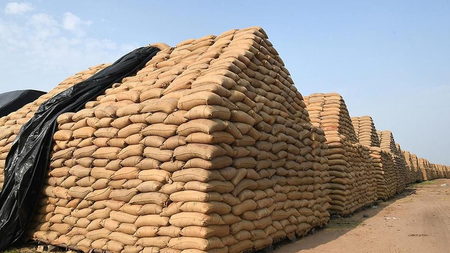
Madurai, June 24 (IANS) The prices of major fine paddy varieties in Tamil Nadu have risen sharply as the Samba and late cultivation season comes to an end, triggering concerns among traders, millers and consumers over the availability of quality grain.
Among the most sought-after varieties, Akshaya Ponni has reached record levels, selling between Rs 37 and Rs 42 per kilogram in wholesale markets. Other popular fine varieties, including RNR and Sree, are being traded at around Rs 37 to Rs 38 per kilogram.
The increase has been attributed primarily to declining arrivals as the marketing season enters its final phase.
With fresh stocks becoming scarce, paddy transactions are now taking place in a staggered manner. Industry sources indicate that the shortage of raw paddy has also pushed up retail prices of fine and superfine rice varieties, which are currently selling at more than Rs 60 to Rs 70 per kilogram in several markets.
The rise in prices has been particularly pronounced for Akshaya Ponni and Sree varieties due to strong consumer demand and limited availability.
Market observers estimate that paddy prices have increased by more than 20 per cent compared to normal levels. In addition, prices of by-products such as husk and bran have also witnessed a moderate increase, adding to overall market activity.
Experts point out that Tamil Nadu continues to depend heavily on neighbouring states, especially Karnataka, for the supply of fine paddy varieties.
A significant portion of the state’s requirement is sourced from outside, making local markets vulnerable to fluctuations in production and supply conditions elsewhere.
This year, poor rainfall and disruptions linked to works in the Tungabhadra dam region have reportedly affected paddy cultivation in Karnataka.
The resulting decline in output has reduced supplies reaching Tamil Nadu, intensifying demand pressures and contributing to higher prices.
Akshaya Ponni, in particular, has recorded one of the steepest increases in recent years, with prices climbing from around Rs 36 per kilogram to nearly Rs 42 per kilogram. However, market stakeholders believe the situation could improve if catchment areas receive adequate rainfall during the coming months and cultivation expands in the next season.
Agricultural trade bodies have also highlighted the need to encourage farmers to cultivate more high-demand fine paddy varieties. They argue that increasing local production would reduce dependence on neighbouring states, improve supply stability and help moderate future price fluctuations.
–IANS
aal/dpb