


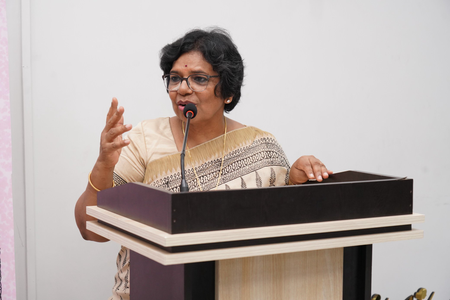
New Delhi, June 10 (IANS) National Commission for Women (NCW) has sought a major overhaul of India’s prison system from a gender perspective. It has recommended the creation of a ‘National Commission for Prisons’. The Commission has also proposed wide-ranging legal and administrative reforms to improve the lives of women prisoners, pregnant inmates, children living in prisons and transgender detainees.
The recommendations are part of the Commission’s Law Review 2025–26 Report on Laws Relating to Women in Prisons. The report was submitted to the Ministry of Home Affairs and the Ministry of Women and Child Development for consideration, the Commission said in a release.
Headed by NCW Chairperson Vijaya Rahatkar, the report calls for a gender-responsive, humane and rights-based correctional system. It proposes amendments to several laws, including the Model Prisons and Correctional Services Act, 2023, the Prisons Act, 1894, the Model Prison Manual, 2016, the Bharatiya Nyaya Sanhita, 2023, the Bharatiya Nagarik Suraksha Sanhita, 2023, the Mental Healthcare Act, 2017, the HIV and AIDS (Prevention and Control) Act, 2017, the Repatriation of Prisoners Act, 2003, and the Transgender Persons (Protection of Rights) Act, 2019.
The establishment of an independent statutory National Commission for Prisons is a key recommendation. This recommended Commission will monitor prison administration, protect prisoner rights, oversee correctional reforms and ensure accountability in custodial institutions, with a special focus on women prisoners.
The report follows an extensive nationwide consultation exercise conducted by the NCW. Regional consultations were organised in Patiala, Noida, Dehradun, Aizawl, Hyderabad, Patna, Panaji and Bhopal. Prison officials, judicial officers, police personnel, legal experts, academicians and civil society representatives were involved in the consultations. The process culminated in a national consultation held at Sri Vijaya Puram in the Andaman and Nicobar Islands on November 22, 2025.
More than 200 suggestions were received during the consultations, of which 145 were shortlisted and incorporated into the final report, the Commission says.
Among the major healthcare reforms proposed are the appointment of permanently posted medical officers, psychiatrists, gynaecologists, nurses and allied healthcare professionals in prisons. The NCW has also recommended mandatory screening of women inmates for breast cancer, cervical cancer, HIV, Hepatitis-B, anaemia and other gender-specific health conditions.
The report advocates specialised healthcare facilities for women with disabilities, chronic illnesses and special medical needs, along with the integration of telemedicine services, digital health monitoring systems and prison health records with district healthcare networks.
The Commission has addressed growing mental health concerns among inmates. Trauma-informed care systems, comprehensive mental healthcare services, post-release psychological counselling and the appointment of female mental health professionals for women prisoners are some of the measures that the Commission has recommended.
The report has also taken care of issues related to pregnant women inmates. It has recommended mandatory institutional deliveries in external hospitals and comprehensive pre-natal and post-natal care. It also proposes that birth certificates of children born during incarceration should not mention prisons as the place of birth.
Extending maternity-related benefits to both undertrial and convicted women prisoners and increasing the age limit for children residing with incarcerated mothers from six years to ten years have also been recommended. It also seeks enhanced healthcare, nutrition, education and developmental support for such children and stronger safeguards against abandonment or neglect when parents are imprisoned.
The NCW has proposed child-friendly visitation facilities and expanded use of video conferencing and telecommunication systems for inmate-family interactions. This is aimed at maintaining family ties.
Skill development programmes, vocational training, counselling services and post-release support mechanisms have also been recommended. These are for rehabilitation purposes. It also calls for the establishment of district-level Released Prisoners’ Aid Societies to facilitate the reintegration of women prisoners into society.
The Commission has recognised vulnerabilities faced by transgender prisoners. It has been recommended that searches be conducted only by women officers and in a manner that preserves privacy and dignity. It has also sought separate accommodation facilities, gender-sensitive healthcare services and safeguards against discrimination and harassment.
On access to justice, the NCW has proposed mandatory release on personal bonds for indigent women undertrials accused in bailable offences wherever legally permissible. It has also recommended a presumption in favour of bail for women accused of offences not punishable with death or life imprisonment, with special consideration for pregnant women, lactating mothers and women with dependent children.
The report also calls for structural changes in prison administration, including ensuring that at least 50 per cent of prison personnel are women and appointing senior women officers, such as women Inspectors General and Deputy Inspectors General, to oversee issues concerning women prisoners.
Mandatory gender-sensitivity training for prison staff, regular inspections by District Legal Services Authorities, State Commissions for Women and independent oversight bodies, and periodic reviews of prison regulations in line with evolving human rights standards have also been recommended.
Institutionalising platforms such as “Nari Bandhi Sabha” and quarterly “Maha Panchayats” have been recommended. According to the commission, this will enable direct communication between women inmates and prison authorities.
It recommends establishing separate women’s prisons in states where the number of women prisoners exceeds 50, ensuring complete segregation from male inmates, and creating dedicated accommodation and support systems for vulnerable groups, including women, transgender persons, elderly prisoners and persons with disabilities.
There has been stress on the need for technology-driven prison administration and grievance redressal mechanisms to improve transparency and efficiency.
According to the release, the recommendations have been made under Section 10(1)(d) of the National Commission for Women Act, 1990, which empowers the Commission to review laws affecting women and suggest reforms to address legal and institutional gaps.
–IANS
brt/dan