


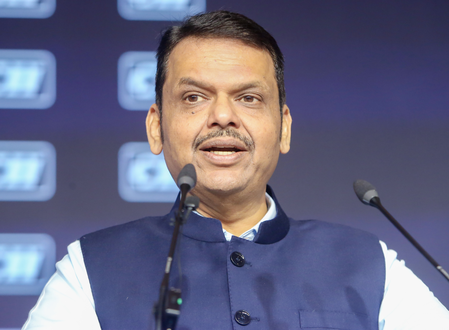
Mumbai, June 2 (IANS) Amid the raging controversy over the exclusion of 80 lakh women beneficiaries from the Mukhyamantri Majhi Ladki Bahin Yojana, Maharashtra Chief Minister Devendra Fadnavis on Tuesday revealed startling discrepancies uncovered during a recent Know Your Customer (KYC) exercise and database verification drive.
He was speaking to reporters after the weekly Cabinet meeting held on Tuesday.
When the Mukhyamantri Majhi Ladki Bahin Yojana was initially launched, the Maharashtra government allowed applicants to register using a ‘self-certification’ model to give women adequate time to gather official documentation.
However, emphasising the necessity of auditing public funds, CM Fadnavis explained that the government cross-referenced applicant data with multiple state and federal databases, including the Income Tax Department, the government employee payroll portal, vehicle registration data (specifically four-wheeler ownership), and ration card records. The integrated database check exposed a staggering number of ineligible beneficiaries.
“Over 500,000 women enrolled in the scheme were found to be actively employed in government services. Nearly 10,00,000 beneficiaries exceeded the prescribed annual income threshold of Rs 2.5 lakh. Shockingly, 14,000 men were found to be illegally drawing financial benefits meant exclusively for women,” he said.
CM Fadnavis stated that despite continuous follow-ups over the past nine months, lakhs of beneficiaries failed to complete their mandatory KYC verification.
“It is highly probable that those who avoided the KYC process did so because they failed to meet the eligibility criteria. Consequently, disbursements to all such ineligible and non-KYC-compliant accounts will be halted immediately,” he announced.
In a compassionate move, the state government has decided not to recover the funds already disbursed to ineligible women, he said.
However, the administration will take strict punitive action against the 14,000 men who defrauded the system. “Every single rupee will be recovered from the men who wrongfully exploited this scheme,” the Chief Minister warned.
Currently, 1.70 crore eligible women have successfully completed their KYC verification and will continue to receive their monthly financial assistance uninterrupted. The government remains open to keeping a registration window active for any remaining valid beneficiaries who still need to complete their KYC, said the government sources.
CM Fadnavis stated that no eligible ‘Ladki Bahin’ in the state has been excluded from the scheme. He clarified that only those who do not fit into the official database or fail to meet the stipulated eligibility criteria will not receive the benefits of this scheme.
He further explained that 80 lakh women were omitted because they either did not fit the criteria or failed to complete their mandatory e-KYC process.
“If there are still women who believe they are eligible but are not receiving the benefits, the government is prepared to reopen the KYC window for them,” CM Fadnavis announced.
He reiterated the strict guidelines established at the launch of the scheme, noting, “When the Ladki Bahin Yojana was launched, specific criteria were set regarding income and age. It was clearly mandated that individuals with government jobs or those owning a four-wheeled vehicle could not avail themselves of the scheme’s benefits.”
Explaining why the discrepancies occurred initially, CM Fadnavis revealed that the scheme’s benefits were initially distributed based on self-certification. “If we had conducted a thorough verification at the very beginning, it would have delayed the launch by a year or a year-and-a-half. Therefore, benefits were rolled out without immediate verification,” he said.
However, emphasising financial accountability, CM Fadnavis added, “The money being distributed belongs to the public, and a Comptroller and Auditor General audit is conducted. We are answerable to them regarding whether verification was carried out. To ensure compliance with the criteria, we initiated the KYC verification process. The KYC window was kept open for eight months, and women who completed the process were deemed eligible.”
–IANS
sj/rad