


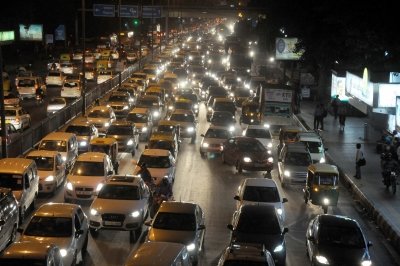
Gangtok, May 19 (IANS) Sikkim has become the first state in the country to implement an odd-even vehicle movement system as part of the measures announced following Prime Minister Narendra Modi’s appeal for fuel conservation and responsible governance, officials said on Tuesday.
Under the new arrangement, private and government vehicles with registration numbers ending in odd digits were allowed to ply on Tuesday, while vehicles ending in even digits will be permitted on Wednesday.
The rule is being enforced across the Himalayan state on state highways, though taxis and two-wheelers have been exempted from the restriction.
Chief Minister Prem Singh Tamang, popularly known as Prem Singh Golay, also announced that private vehicles would be allowed unrestricted movement on Saturdays and Sundays to minimise inconvenience to the public.
The move comes as part of Sikkim’s broader initiative aimed at reducing fuel consumption and encouraging responsible transport practices.
The Chief Minister has also been seen using public transport and walking to official programmes, signalling the state government’s emphasis on leading by example.
The implementation, however, has generated mixed reactions among residents in the state.
Keshav Sapkota, a resident, said that while the measure may serve as a symbolic administrative initiative, it may not significantly impact India’s overall fuel consumption given Sikkim’s relatively small population and limited vehicle density.
He also pointed to the geographical challenges faced by people in the mountainous state.
“Only a few selected urban areas have better connectivity, while most of the state consists of difficult terrain. Because of this, many people are facing inconvenience,” Sapkota said.
Another resident, Remon Chettri, welcomed the initiative, saying Sikkim has consistently set an example in implementing national policies related to sustainability and public discipline.
He said the Chief Minister Tamang’s decision to use public transport and walk to several venues was encouraging citizens to adopt similar practices.
“At a symbolic level, Sikkim continues to lead through policy implementation,” he added.
Chettri, however, suggested certain relaxations during school hours and for inter-district travel, particularly for commuters travelling between districts such as Namchi, Gyalshing, Soreng and Gangtok.
He proposed that the state government consider district-wise implementation or special relaxations for Gangtok, which serves as the state’s primary administrative and commercial hub.
–IANS
tdr/khz