


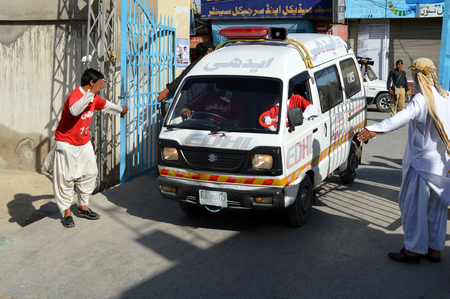
New Delhi, April 14 (IANS) Over 80 per cent of Balochistan’s population lack access to primary healthcare, according to its provincial health secretary, and budget shortfalls are central to this problem, a new report has said.
The province’s most basic public services being “fundamentally broken,” with human resource shortages and the province’s low education profile, an editorial in Business Recorder said.
Shortfall in budget allocation to this province is central but not the sole cause, because the scale of deprivation in Balochistan suggested inefficiency in deployment, lack of accountability in spending.
Punjab’s health budget alone exceeds Balochistan’s entire development outlay, it argued, adding that promotions of several hundred medical officers may ease administrative pressure.
However, it does not solve staffing gaps as Balochistan’s remote districts deter doctors due to weak infrastructure, security risks and limited career incentives.
“Without a framework that links postings in underserved areas to meaningful professional and financial incentives, staffing gaps will persist,” the report said.
Low education and public health awareness in the province, creates a vicious cycle in which poor outcomes reinforce social and economic vulnerability.
The analyst criticised administration’s usual justifications such as vast geography, difficult terrain and limited resources for poor health sectors.
“A policy environment that continues to cite the same limitations without materially improving outcomes points to a failure of execution rather than a lack of understanding,” the editorial said.
Further, security concerns exacerbate failing health outcomes. “In several parts of the province, the presence of infrastructure does not translate into service delivery because the conditions required for regular operation are absent,” the editorial said.
Though efforts in digitisation, telemedicine and remote monitoring can support service delivery, particularly in sparsely populated areas, the report argued that technology cannot compensate for facilities that are understaffed or inaccessible.
—IANS
aar/