


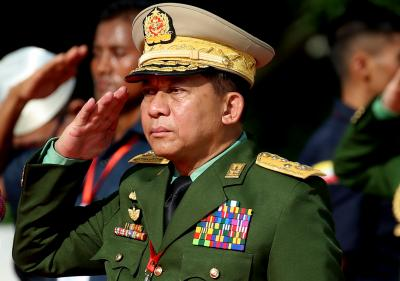
New Delhi, April 12 (IANS) The elevation of General Min Aung Hlaing, former chief of the Myanmar junta, as the country’s new President has ignited a debate over the country’s shifting priorities. Political watchers are discussing at length whether this makes a transition towards a ‘civilian regime’ or amounts to maintaining the status quo of military junta rule.
One may argue over the General’s credentials in the Myanmar Army and the urgent need for reforms in the country’s governance, but the underlying facts signify only the hardening of the junta rule.
A pro-military website in the capital described the change of guard as “return to civilian-led democracy”, adding fuel to the debate, but the critics have dug out uncomforting precedents which record incidents of suppression and repression under General Min Aung Hlaing’s watch.
The elections were held in three phases in December 2025 and January 2026, but this did more to formalise the military rule, reports a leading portal, Global Asia Forum.
“The military, led by Min Aung Hlaing, seized power in a coup in February 2021, dissolved the democratically elected parliament, arrested MPs and state leaders including President Win Myint and State Counsellor Aung San Suu Kyi, and launched a bloody crackdown against people who took to the streets to oppose the takeover,” the news portal points out.
Besides this, all democratic parties were dissolved, and a quarter of the seats in both the Upper and the Lower House were reserved for the military.
According to analysts, more than 80 per cent of the Union Ministers are purportedly either active-duty officers or retired military personnel.
The portal further noted that the new President purged potential rivals and surrounded himself with loyalists.
His deputy as military chief before becoming President, General Soe Win, has been replaced by General Ye Win Oo, who served as the Chief of Military Security Affairs, the military’s internal security apparatus, and is widely known as Min Aung Hlaing’s “eyes and ears.”
According to Myanmar analyst Ye Myo Hein, “Soe Win, being the last remaining senior figure from earlier generations (of army officers), may be viewed as too strong and institutionally grounded and could challenge Min Aung Hlaing’s continued influence and personal security. By contrast, the selection of Ye Win Oo appears to reflect a preference for loyal dependency and his own safety.”
According to a biography compiled by the British Broadcasting Corporation, “Min Aung Hlaing rose through the ranks and in August 2010 he became joint chief of staff.” Many argued that his loyalty to then-junta chief Senior General Than Shwe eventually led him to the top.
Moreover, Min Aung Hlaing’s ascent to Myanmar’s presidency comes at a time when the country is going through a severe economic crisis, aggravated by war in the Middle East as well as years of mismanagement.
Whether Min Aung Hlaing survives all those challenges or maintains the lead over his predecessors, only time will tell.
–IANS
mr/uk