


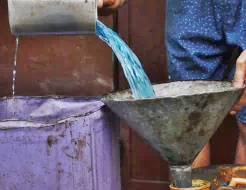
New Delhi, March 29 (IANS) The government on Sunday eased the petroleum safety and licensing rules to allow faster distribution of kerosene to households, amid the disruption in cooking fuel supplies due to the Iran war.
The Ministry of Petroleum and Natural Gas said in a notification that the measures would enable the ad-hoc distribution of kerosene to households for cooking and lighting in 21 states and Union Territories
Select petrol pumps operated by public sector oil marketing companies such as Indian Oil, Bharat Petroleum, and Hindustan Petroleum are permitted to store and dispense kerosene to households.
Each designated retail outlet is allowed to store up to 5,000 litres of kerosene. Up to two such service stations can be designated per district.
The move specifically supports 21 states and Union Territories, including Delhi, Haryana, Uttar Pradesh, and Gujarat, focusing on areas that had previously become “kerosene-free”.
These temporary provisions are effective for 60 days to address immediate supply disruptions. In addition to petrol pumps, kerosene will be distributed through the traditional ration shop network, with states encouraged to prioritise rural areas.
The move is a response to global energy supply disruptions caused by conflicts in West Asia, which have impacted LNG supplies and caused potential LPG shortages.
The government has made an additional allocation of 48,000 kilolitres of kerosene to states, over and above their regular supply.
As LNG supplies tighten, kerosene is being reintroduced to ensure uninterrupted availability for households, particularly for cooking and lighting.
The Ministry of Petroleum and Natural Gas assured that despite the relaxation of rules, safety and monitoring standards will remain in place to prevent the diversion of PDS kerosene for adulteration.
Alternative fuel options like kerosene and coal have been offered to ease pressure on LPG demand.
The Ministry of Coal has already issued an order to Coal India and Singareni Collieries to allot higher quantities to states for distributing coal to small, medium and other consumers.
States have also been advised to facilitate the new PNG connections for both domestic and commercial consumers.
–IANS
sps/vd