


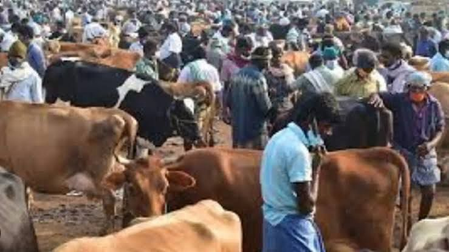
Vellore, March 19 (IANS) The century-old weekly cattle market at Poigai near Vellore in Tamil Nadu, known for drawing thousands of traders every Tuesday, has witnessed a sharp decline in activity following the enforcement of the Model Code of Conduct (MCC) for the upcoming Assembly elections.
Located near the Poigai bus stand along the Chennai-Bengaluru National Highway, about 10 kilometres from Vellore, the market has long served as a key trading hub for livestock in the region.
On a typical Tuesday, more than 2,000 traders converge, with around 1,500 cattle changing hands in transactions that collectively run into several crores of rupees. However, the introduction of strict cash restrictions under the MCC, which limits individuals to carrying a maximum of Rs 50,000, has significantly disrupted the functioning of the market.
The latest trading day, which marked the first session since the MCC came into force, saw noticeably fewer traders and reduced cattle arrivals.
The market, which traditionally operates almost entirely on cash transactions, has been particularly affected by intensified surveillance measures. Flying squads and monitoring teams have stepped up inspections, leading to seizures of unaccounted cash and creating apprehension among traders and buyers alike.
The decline in participation has translated into a substantial drop in sales, with traders estimating a fall of around 30 per cent compared to usual trading days. The restrictions have also highlighted the challenges faced by participants who are not accustomed to digital payment systems, making it difficult to adapt quickly to alternative modes of transaction.
In addition to local traders from Vellore, the Poigai market typically attracts participants from neighbouring districts such as Tirupattur, Ranipet, Dharmapuri and Krishnagiri, as well as from bordering regions in Andhra Pradesh and Karnataka.
However, heightened checks at inter-district and interstate borders have further discouraged movement, reducing the inflow of buyers from outside regions.
The current situation has raised concerns among traders and cattle owners, as the weekly market remains a vital source of livelihood for many.
With election-related restrictions expected to remain in place for the coming weeks, there is growing uncertainty over the continuity of regular trade. Amid these challenges, stakeholders have sought measures to facilitate legitimate trade during the election period while ensuring compliance with regulatory norms, in order to prevent prolonged disruption to the rural economy dependent on livestock commerce.
–IANS
aal/dpb